Cartagena de Indias… Sometimes all it takes is a name to instantly fill your mind with exotic thoughts and transport you to the other side of the world.
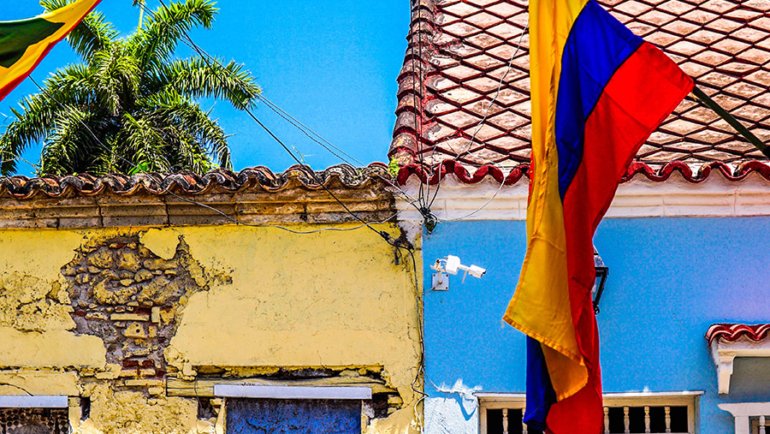
Just hearing this name, I could already picture myself walking in enchanting streets lined with colorful buildings while listening to street music.
I don’t often write about cities as this site is more about nature and the outdoors, but I felt the History of Cartagena was interesting enough to publish a little something about it. 🙂
Indeed, the city not only offers very picturesque vistas but also a fascinating trip back in time. Cartagena has indeed preserved this very special colonial atmosphere that fascinates every visitor.
Over the years, Cartagena has established itself as one of the top destinations in Colombia.
Quick Info
Best season: December to April
Official Link: Colombia.travel
San Felipe de Barajas Castle: Entrance: 25,000 COP (8.5 USD) | Open 8 AM – 6 PM | 1 hour of visit.
Hotel recommendation: Hostal Casa Escallon, in the Old Town.
A Few Words About The History of Cartagena
It is in 1533 that the Spanish Conquistador Pedro de Heredia founded this seaport, and it has become the most important link between Spain and its American empire.
But at first, they made a costly mistake in their city plans.
At that time, the Spanish were pillaging silver and gold from Peru and present-day Bolivia, and it was all transiting through Cartagena to be shipped to Spain. Such a concentration of wealth in such a small area could only lead to problems, but for some reason they didn’t judge it necessary to include any kind of defensive walls when they built the city.
As soon as 1536, they had started the construction of the San Felipe de Barajas Castle on a nearby hill, but it wasn’t much of a help to protect the city – It was turned into a larger and true fortress only 121 years later.
It was too good an opportunity to miss for the pirates roaming the Caribbean Sea. In the next decades, Cartagena found itself under the attack of French, English (the famous Francis Drake), and Dutch pirates who ransacked and burnt down the city, and held it until enormous ransoms were paid.

In 1586, after seeing Cartagena being continually attacked by pirates, the King of Spain commissioned the construction of a wall to turn the city into an impregnable fortress.
However, it didn’t prevent the French to raid Cartagena in 1697 and take over the city and the San Felipe de Barajas Fortress. This was part of a war between France and a large European alliance. If you are curious, you can read more about this war here.
44 years later, in 1741, the fortress this time fell to the British, during the Battle of Cartagena de Indias, part of a war between Britain and Spain.
Well, this simplified summary gives an idea of what the History of Cartagena looks like: an endless succession of battles!
Cartagena Old Town
Armed with some knowledge of the History of Cartagena, let’s go back to what makes the city so irresistible: its old town, that you could visit with the virtual tour at the top of this page.
With its colorful and flamboyant buildings, you can tell Cartagena was a city of importance with a flourishing economy. And this was the result of a part of its history I haven’t talked about yet, the slave trade.
By the end of the 17th century, Cartagena simply was the largest slave port in the Americas. It is estimated that at least a million enslaved African people were brought to Cartagena.
Today, Afro-Colombians represent about 10% of the Colombian population. You can sometimes see in the streets of the old town, their descendants wearing colorful African outfits and selling tropical fruits, offering to take a picture with you for a few pesos.
I enjoyed walking in these streets immensely, marveling at each and every building, ancient door, or beautifully preserved balcony. Cartagena may not have the most beautiful history (Human history is rarely beautiful, anyway), but I found this colonial atmosphere absolutely enchanting.
Forget what you have heard about Colombia, the old town of Cartagena is perfectly safe to stroll in – It is probably the safest destination in the whole country.
I will not get into a detailed guide of each monument and each plaza you can visit in Cartagena, you can find many detailed guides to Cartagena online – or through the link in the Quick Info table – if you need help to plan your trip.
With the help of the virtual tour and the map at the bottom of this page, I believe you can already easily plan a nice walking itinerary in the old town.
VIRTUAL TOUR – Cartagena Old Town
Visit the streets of the old town of Cartagena, with its beautiful plazas and monuments. (13 panoramas).
The virtual tour opens in a lightbox. Use your mouse to move around the 360° panoramas.

My personal favorite is the Plaza San Pedro Claver, bearing the name of a Spanish Jesuit priest who was among the first to care for the slaves and speak up for them to be treated humanly.
San Felipe de Barajas Fortress
Nowadays, the San Felipe Castle is a well-preserved site that you should include in your visit to Cartagena. It offers great panoramic views of the whole city, with the old town, and the skyscrapers of Bocagrande with the Caribbean Sea in the background.
It is easily accessed by a short taxi ride – or you can even walk there from the Clock Tower Gate. I personally went by taxi and came back walking when I realized how close it is to the old town.
Below is a virtual tour of the fortress so you can see what it all looks like.
VIRTUAL TOUR – San Felipe de Baraja Fortress, Cartagena
Visit Cartagena’s famous fortress and enjoy panoramic views over the city (6 panoramas).
The virtual tour opens in a lightbox. Use your mouse to move around the 360° panoramas.
The Towers of Bocagrande: A Totally Different Cartagena
As charming as the old town is, there is something that keeps taking your attention away from the old monuments as you walk on the city walls: an impressive skyline with dozens of skyscrapers, which did not fail to remind me of the one in Panama City.
I could easily fall into the travel writing cliché of saying that Cartagena is indeed a city of contrasts, as old and traditional buildings are next to modern towers. But when you think about it, it happens in many, many cities around the world.
In any case, it can be said that Cartagena has fully embraced the 21st century. Once a thin strip of land with not much on it, Bocagrande now looks like a mini Manhattan. It is the most expensive and exclusive part of Cartagena, and this is where you will find luxury hotels and shopping malls. It feels like walking in a totally different city.
I went there to have some beach time, which you can’t have in the old town. You can see what it looks like in the panorama below.
VIRTUAL TOUR – Bocagrande, Cartagena
Check out the beach of Bocagrande and its skyline (1 panorama).
The virtual tour opens in a lightbox. Use your mouse to move around the 360° panoramas.
TRAVEL MAP – Cartagena
Visualize on the map the precise locations of panoramas in the virtual tours and places of interest to help you prepare your trip to Cartagena.
The map opens in a lightbox. Zoom in to explore!
Final Thoughts About Cartagena
Cartagena had been near the top of my South America bucket list for quite some time, and I wasn’t disappointed!
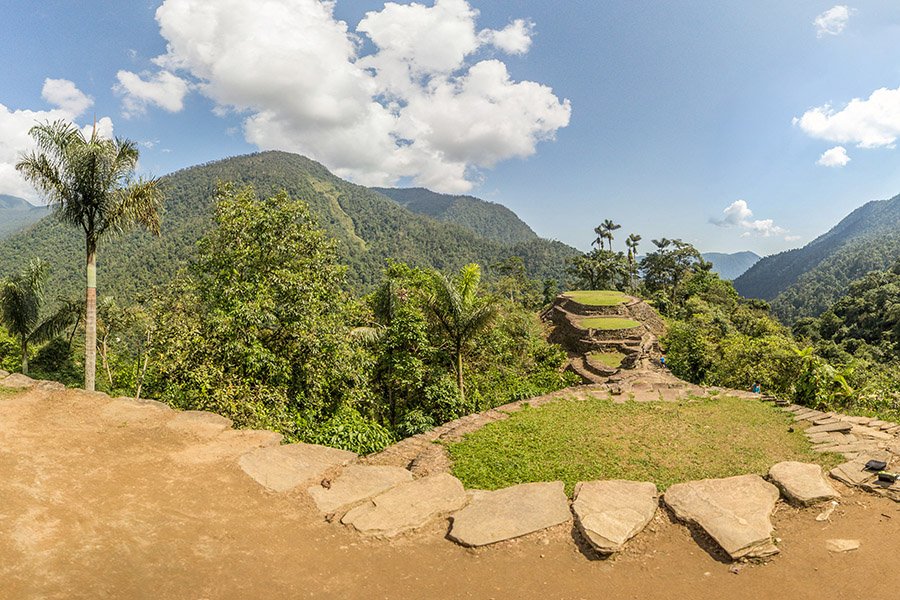
It was a great place to relax after my strenuous trek to the Lost City, and I can’t imagine any Colombia travel itinerary that wouldn’t include Cartagena.
The colorful old town is for sure pleasing to the eye and interesting enough on its own, but I believe that it is knowing about its History that makes the visit truly meaningful and much more fascinating than it already is.