

Chad is a country of dramatic contrasts — from the windswept Sahara in the north to the wildlife-rich savannas of the south. It makes perfect sense, then, that the nation embraces two animals as its national symbols: the mountain goat, representing the hardy, pastoral north, and the lion, symbolising the strength and life of the southern savannas.
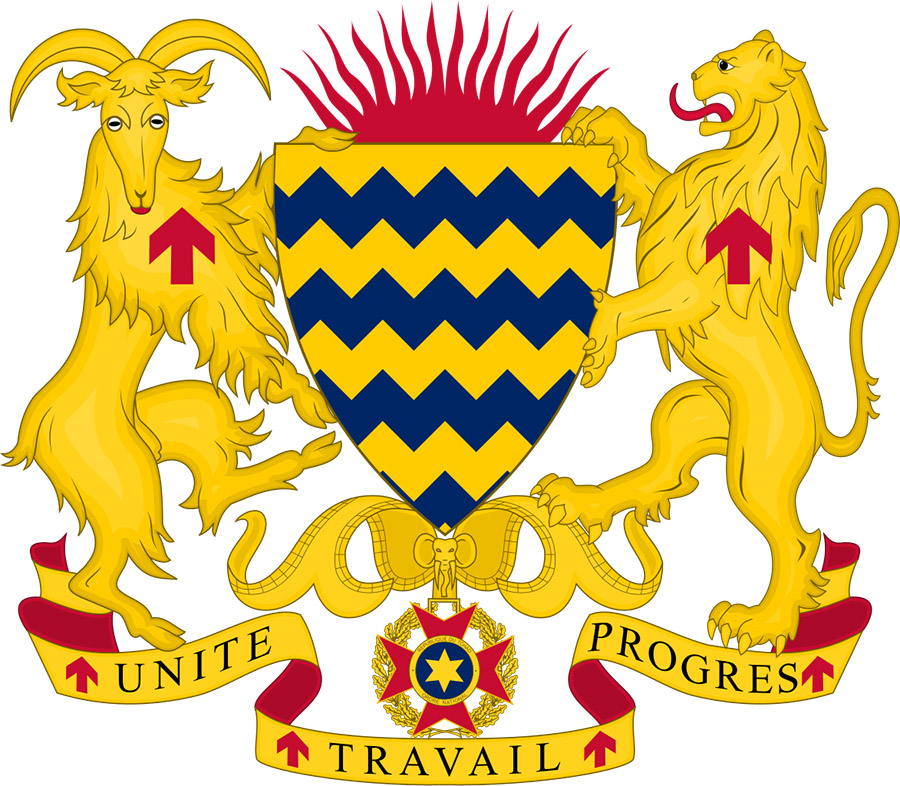
Both animals stand proudly on the coat of arms of Chad, flanking a shield marked by the sun and the wavy lines of Lake Chad. Together, they form a matched pair: one domestic and unassuming, tied to daily life; the other wild and powerful, tied to the country’s natural heritage.
Meet the Mountain Goat and the Lion, National Animals of Chad
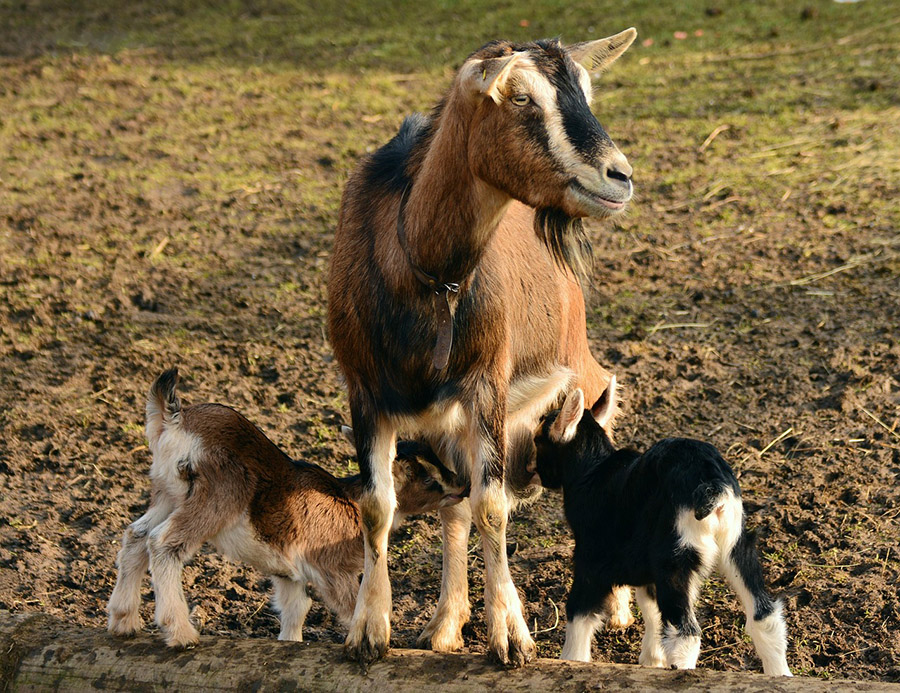
The mountain goat on Chad’s coat of arms represents the rugged north — a land of desert plateaus, nomadic herders and high basalt mountains like the Tibesti. These goats (domesticated Capra hircus) are usually short-haired, sandy-coloured and incredibly resilient. They thrive on sparse shrubs, travel long distances with pastoralists and withstand heat that would overwhelm most livestock. In everyday Chadian life, goats provide milk, meat and hides, making them economically and culturally indispensable.
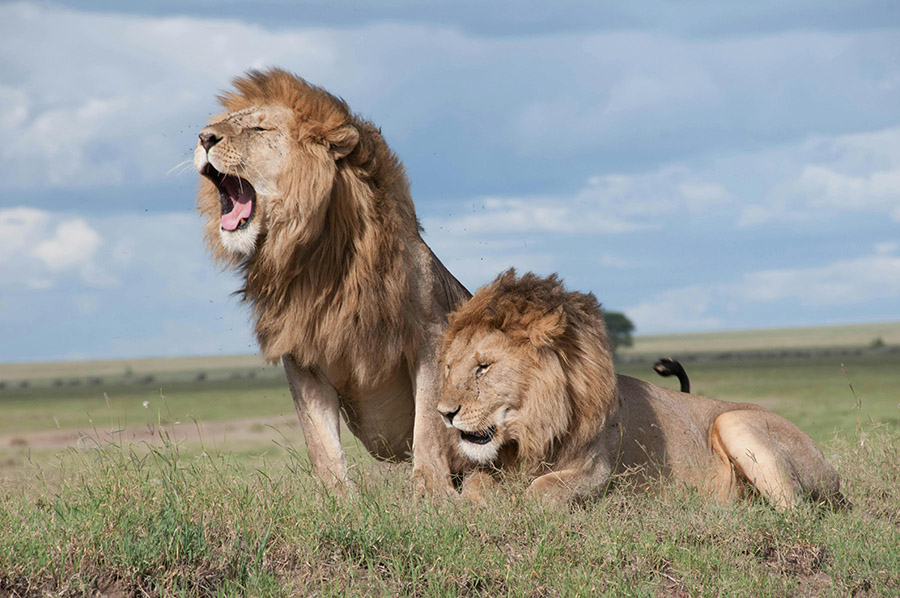
The lion, by contrast, embodies the wildlife of southern Chad. The country’s lions belong mostly to the West–Central African lineage, known for their slightly smaller manes and deep golden coats. In places like Zakouma National Park, lions move through tall grasses, hunt tiang and kob antelopes, and form prides led by experienced lionesses. As apex predators, they regulate herbivore populations and maintain balance in these ecosystems.
Both animals hold symbolic weight. The goat stands for resilience, subsistence and endurance, while the lion stands for strength, courage and sovereignty.
Where Do These Animals Live in Chad?
Mountain goats live across northern Chad, especially among the Toubou and Arab pastoralists who herd them through the Sahel and into the fringes of the Sahara. Their world is one of acacias, rocky plateaus and long dry seasons. In villages from Faya-Largeau to Bardaï, goats are an everyday presence — wandering between compounds, grazing on scrub and forming part of the subsistence economy.
Lions thrive in the opposite environment. Their stronghold is Zakouma National Park in the southeast, a landscape of floodplains, rivers, thicket belts and savannas. The climate is more seasonal than harsh — green in the rainy season, dusty and dry in the harmattan months. Historically, lions roamed much of southern and central Chad, but today Zakouma and nearby protected zones are their primary safe havens.
Why and When Did They Become Chad’s National Animals?
Chad adopted its current coat of arms in 1970, and this emblem formally cemented both animals as national symbols.
- The mountain goat stands on the heraldic right (dexter), symbolising the northern, pastoral regions.
- The lion stands on the heraldic left (sinister), symbolising the southern savannas.
The symbolism was carefully chosen. Chad wanted an emblem reflecting both its cultural diversity and its geographical duality. The goat represents the economic lifeline of northern communities: mobility, survival and adaptation in extreme deserts. The lion represents the untamed natural beauty of southern Chad, especially its wildlife parks.
There is no controversy in their designation; both symbols were intentionally selected during the nation’s post-independence identity-building period. One represents people, the other represents wilderness — and together, they speak to Chadian unity.
Where Are the Goat and the Lion Featured in Chad?
Both animals appear directly on the coat of arms, which is widely used on:
- national government buildings
- official documents and passports
- embassies
- national institutions
The goat and lion are not commonly displayed on currency or stamps, but the coat of arms itself occasionally appears in official publications or commemorative items.
In tourism materials and conservation media, the lion is frequently highlighted as a flagship species of Zakouma National Park. In rural cultural contexts, the goat appears in celebrations, family ceremonies and pastoral storytelling.
 Source: Wikimedia Commons
Names of the Mountain Goat and the Lion
Mountain Goat
- English: Goat
- French: Chèvre
- Arabic: ماعز (ma‘iz)
- Sara languages: Variants such as ngör / nger
- Other local names: Numerous ethnic terms distinguish bucks, does and kids, reflecting pastoral traditions.
Lion
- English: Lion
- French: Lion
- Arabic: أسد (asad)
- Sara languages: mbâra (varies by region)
- Local poetic names: “Bush king,” “Night thunder,” referencing the roar.
Are These Animals Endangered?
Goat: Not endangered. As a domesticated species, goats are abundant across Chad. However, certain local breeds may face genetic dilution.
Lion: Yes. West–Central African lions are among the most threatened lion populations globally. Their numbers declined sharply due to poaching, habitat loss and conflict with herders.
Thanks to strong conservation management, Zakouma National Park now protects one of the most stable lion populations in the region.
Interesting Facts
- Goats in northern Chad can survive on minimal water, making them ideal for desert pastoralism.
- In many Chadian communities, goats are used as marriage gifts or given during important family ceremonies.
- Zakouma’s lions are considered among the healthiest and most genetically stable lions in Central Africa due to long-term ranger protection.
- Lions in Chad often hunt tiang antelope, forming dramatic chases across the floodplains.
- The combination of a goat and a lion in the coat of arms symbolically unites Chad’s extreme landscapes: the desert north and the fertile south.
Other Beautiful Animals Native to Chad
- Kordofan giraffe – Critically endangered subspecies found in Zakouma.
- Tiang antelope – Once migratory in huge herds across the southeast.
- Greater kudu – Iconic with its spiral horns.
- Striped hyena – A shy scavenger of the Sahel.
- Saharan cheetah – One of the rarest big cats on Earth, occasionally sighted in the far north.
Frequently Asked Questions
Does Chad really have two national animals?
Yes. The mountain goat and the lion both appear on the coat of arms, officially representing the north and south.
Why a goat?
It symbolizes the resilience and pastoral life of northern Chad, where goats are essential to survival.
Why a lion?
The lion represents strength, leadership and the wildlife heritage of southern Chad.
Where can I see lions in Chad?
Zakouma National Park is the best location, with one of Africa’s most successful lion conservation programmes.
Is the lion endangered in Chad?
Yes. West–Central African lions are threatened, but Zakouma’s population is now recovering.
What do the wavy lines on Chad’s coat of arms mean?
They represent the water of Lake Chad, while the rising sun symbolises a new nation.
Is the goat endangered?
No. Domestic goats are abundant across Chad.
