The Florida Gar, scientifically known as Lepisosteus platyrhincus, is a fascinating species of freshwater fish native to the Southeastern United States. Known for its distinct prehistoric appearance and elongated body, the Florida Gar is often a subject of intrigue among aquatic enthusiasts and wildlife experts alike.
With its robust scales, needle-like teeth, and unique adaptations, this fish has successfully survived through the ages. This article aims to provide a comprehensive overview of the Florida Gar, touching upon its physical characteristics, behavior, habitat, and much more.
As an inhabitant of the slow-moving rivers, lakes, and swamps of Florida and southern Georgia, the Florida Gar is well-adapted to its environment. Its ability to gulp air into a specialized swim bladder allows it to survive in waters with low oxygen levels, making it a resilient and adaptable species.
This fact sheet delves into various aspects of the Florida Gar’s life, from its diet and reproductive habits to its role in the ecosystem and current conservation status. Whether you’re a budding ichthyologist or simply curious about this remarkable fish, read on to discover all you need to know about the Florida Gar.
The Florida Gar At a Glance
Classification
| Kingdom | Animalia (Animals) |
| Phylum | Chordata |
| Class | Actinopterygii (Fish) |
| Order | Lepisosteiformes |
| Family | Lepisosteidae |
| Genus | Lepisosteus |
| Species | L. platyrhincus |
Essential Information
| Average Size | 20-34 inches (51-86 cm) |
| Average Weight | 3-10 pounds (1.4-4.5 kg) |
| Average Lifespan | Up to 18 years |
| Geographical Range | Southeastern United States |
| Conservation Status | Least Concern |
Species and Subspecies
The Florida Gar is a distinct species within the gar family and does not have recognized subspecies. However, it shares its genus, Lepisosteus, with several other species of gar. Despite the similarities among these species, such as elongated bodies and sharp teeth, each has its unique adaptations and geographical specializations.
Compared to other gar species, the Florida Gar has a shorter and broader snout, which aids in its specific feeding habits. It primarily inhabits freshwater systems in Florida and southern Georgia, unlike some of its relatives that can be found in a wider range, including both freshwater and brackish environments.
Description
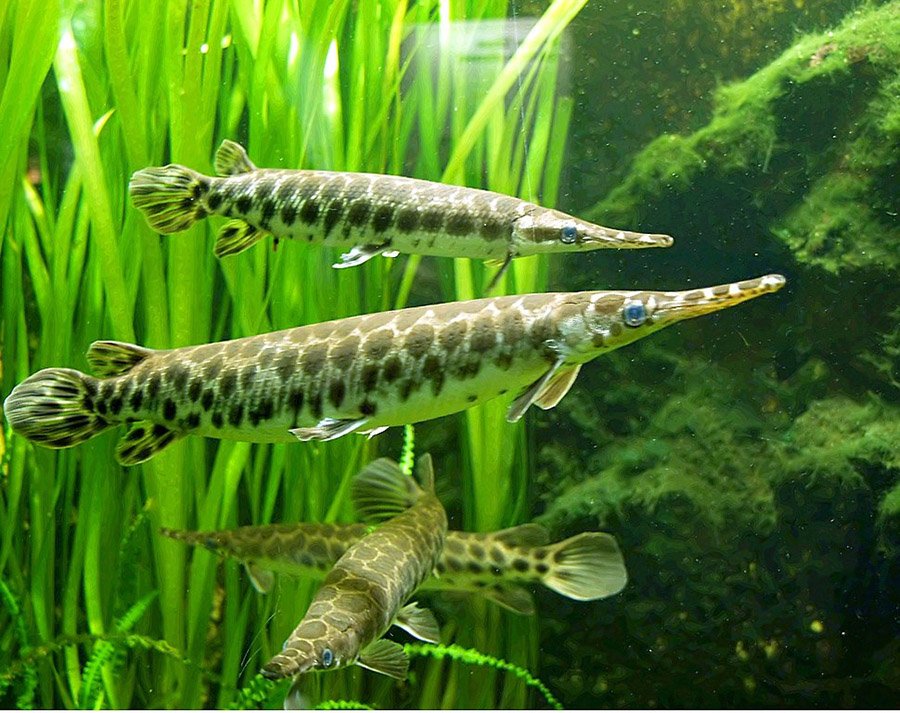
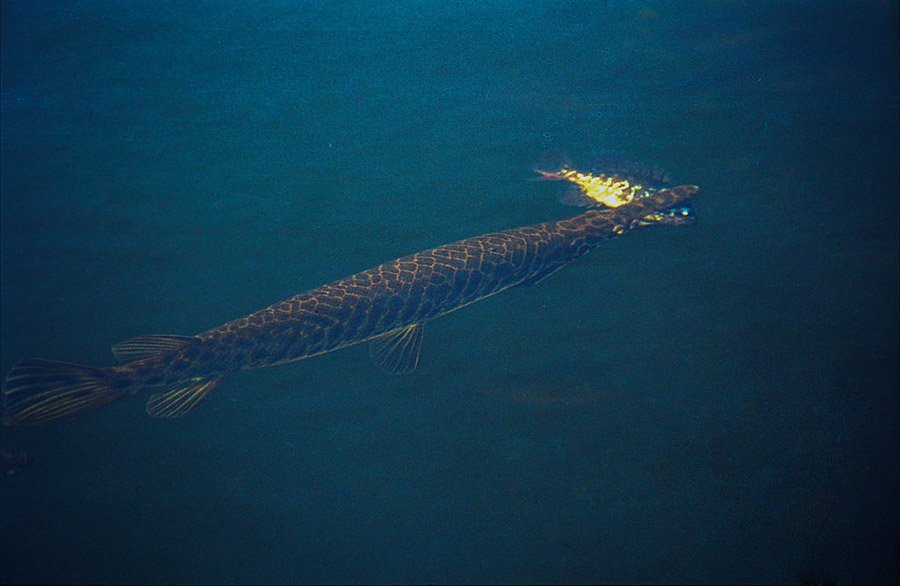
The Florida Gar is noted for its elongated body covered with interlocking ganoid scales that provide a robust armor-like protection. Its coloration typically consists of a brown to olive background with darker blotches and spots, offering excellent camouflage amidst aquatic vegetation. This fish can grow up to 34 inches (86 cm) in length and weigh up to 10 pounds (4.5 kg).
Anatomically, the Florida Gar possesses a long snout filled with sharp, needle-like teeth, ideal for snatching prey in its aquatic environment. The gar’s swim bladder functions as a lung, allowing it to breathe air directly, a valuable trait in oxygen-poor waters. Its dorsal and anal fins are positioned far back on the body, contributing to its swift, darting movements.
While there is no significant sexual dimorphism in this species, females generally grow larger than males, particularly during the breeding season when they are full of eggs. This slight size difference aids in the identification of genders during certain times of the year.
Habitat and Distribution
The Florida Gar is predominantly found in the southeastern United States, particularly in the freshwater bodies of Florida and southern Georgia. Its preferred habitats include slow-moving rivers, lakes, and swamps where vegetation is abundant. These environments offer ample cover and hunting grounds for this ambush predator.
This species thrives in warm, shallow waters and is particularly adapted to regions with low oxygen levels. Its ability to surface and gulp air allows it to inhabit areas that might be unsuitable for other fish species, giving it a competitive advantage in its native ecosystems.
Behavior
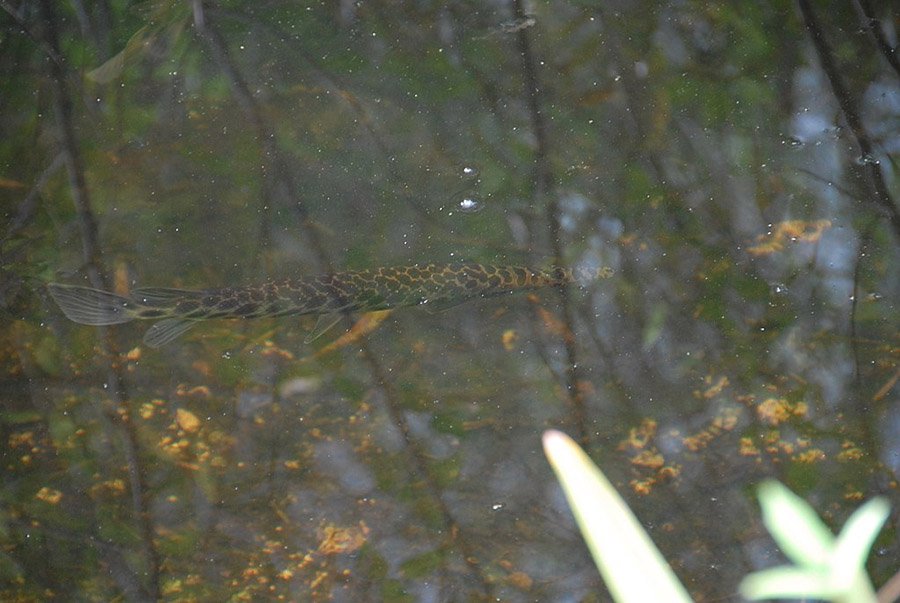
Florida Gars are generally nocturnal predators, hunting primarily at night when their prey is most active. During the day, they can often be found lurking motionless near the water surface or among submerged vegetation, utilizing their camouflage to avoid detection.
Socially, the Florida Gar is a solitary creature, preferring to hunt and live alone except during the breeding season. This solitary nature is advantageous for an ambush predator, reducing competition and allowing it to exploit its hunting grounds efficiently.
Communication in Florida Gars is not well-documented, but like many fish, they may use body language and subtle movements to signal intentions to conspecifics, particularly during mating season. However, their stealthy nature means that they rely more on remaining undetected than on overt communication.
Diet and Hunting/Feeding Behavior
The Florida Gar is a carnivorous fish with a diet that primarily consists of smaller fish, crustaceans, and insects. Its sharp teeth and strong jaws make it well-equipped to capture and consume a variety of prey items that venture too close.
Hunting primarily takes place during the night when the gar is most active. It uses its excellent vision and stealth to approach prey undetected, striking swiftly with a side-to-side head movement to capture its meal. This ambush strategy is highly effective in the murky, vegetated waters it calls home.
Feeding behavior varies depending on prey availability and environmental conditions. The Florida Gar is opportunistic, adjusting its diet based on the abundance of prey species, thus playing a crucial role in controlling the populations of its prey, maintaining a balanced ecosystem.
Predators
While adult Florida Gars have few natural predators due to their size and armored scales, juvenile gars are more vulnerable. Birds of prey, larger fish, and reptiles such as alligators may prey on young gars.
In the aquatic food chain, the Florida Gar occupies a higher trophic level, but it must still remain vigilant for any opportunistic predators, especially in environments where larger predatory species are present.
Reproduction and Life Cycle
Breeding for Florida Gars typically occurs in the spring when water temperatures rise, providing optimal conditions for egg development. Males and females come together in shallow, vegetated waters, where females lay eggs that adhere to submerged vegetation.
There is no gestation period in the traditional sense for this oviparous species, as the eggs are fertilized externally by the males. A single female can lay thousands of eggs, which hatch in about a week, depending on environmental conditions.
Once hatched, the young gars receive no parental care and must fend for themselves. The high number of eggs ensures that, despite predation, enough offspring survive to adulthood to sustain the population.
Conservation
The Florida Gar is currently listed as a species of Least Concern, meaning it is not at immediate risk of population decline. However, like many aquatic species, it faces threats from habitat destruction, pollution, and the introduction of invasive species.
Efforts to conserve the Florida Gar primarily involve protecting its natural habitats through environmental regulations and conservation programs aimed at preserving water quality and aquatic ecosystems.
There are no specific conservation programs dedicated solely to the Florida Gar, but it benefits from broader initiatives that aim to maintain the health and biodiversity of freshwater habitats in the Southeastern United States.
Fun Facts
- The Florida Gar is often called a “living fossil” due to its resemblance to ancient fish species that existed over 100 million years ago.
- Unlike most fish, the Florida Gar can breathe air, allowing it to survive in low-oxygen environments unsuitable for many other aquatic creatures.
- The ganoid scales of the Florida Gar are so tough that they have been used by humans in the past to create arrowheads and protective gear.
- Despite its fearsome appearance, the Florida Gar poses little threat to humans and plays an essential role in controlling prey populations within its ecosystem.
- The Florida Gar’s ability to surface for air is facilitated by a specialized swim bladder that functions similarly to a lung, a rare adaptation among fish.
Frequently Asked Questions
Can I keep a Florida Gar as a pet?
Yes, but it requires a large tank, specific water conditions, and a diet of live prey, making it suitable only for experienced aquarists.
Are Florida Gars dangerous to humans?
No, they are not dangerous to humans; their primary diet consists of smaller aquatic creatures.
How can you tell the difference between male and female Florida Gars?
Females are generally larger than males, especially during the breeding season when they carry eggs.
What is the lifespan of a Florida Gar in captivity?
With proper care, a Florida Gar can live up to 18 years in captivity.
Where are Florida Gars most commonly found?
They are most commonly found in the slow-moving rivers, lakes, and swamps of Florida and southern Georgia.