Are you feeling uncertain about the outdoor skills you will need for your next adventure? You are not alone. Many beginners find the idea of learning survival skills overwhelming at first, yet these skills unlock a sense of freedom and self-reliance that makes every journey more rewarding.
Knowing how to navigate, build a fire, or handle emergencies can be the difference between an enjoyable trip and a dangerous situation. These abilities not only keep you safe but also build confidence, allowing you to explore hiking trails, campgrounds, rivers, and climbing routes with greater independence.
In this guide, we will look at essential survival skills that anyone can learn, no matter their activity of choice. From reading a map to preparing for wildlife encounters, you will see that challenges are not obstacles but opportunities to grow stronger as an adventurer.
Plan Before You Go
Your outdoor adventure success starts before you hit the trail. Good preparation builds your wilderness confidence.
Trip planning basics for beginners
Your journey to outdoor mastery starts with picking the right spot for your skill level. You need to think about three key things: weather and season, what you want to do, and what you can handle right now.
Weather patterns should be your first research priority. Mountain areas get snow-covered in winter, and desert spots can reach dangerous heat levels in summer. The shoulder seasons can throw some curveballs too—spring brings mud that closes trails in the Northeast, and fall might overlap with hunting season when you’ll need bright clothes to stay safe.
You’ll want to get complete information about where you’re going. Official websites from the Forest Service, National Park Service, and Bureau of Land Management give you the most reliable updates. The parks’ social media channels also help you get immediate updates and visitor tips.
Make sure you really understand the permit rules before you leave. Many spots need advance bookings, especially when it’s busy. Some places let you get permits when you arrive or issue them yourself. Look into parking too—you might need to pay fees, get special permits, or know about seasonal gate closures.
How to pack smart and light
Packing has two big mistakes: taking too much stuff and leaving important things at home. Smart outdoor enthusiasts know that being able to move easily gives them freedom.Start a packing list 1-2 weeks before you leave. This gives you time to find the right gear and remember those easy-to-forget items. Lay everything out before it goes in your pack to spot what’s missing or not needed.
Here’s what you need to know about packing clothes:
- Pick items that work for different situations
- Pack just one week’s worth whatever your trip length
- Go for quick-drying, odor-resistant materials
- Stick to colors that mix and match easily
Pro hikers love using packing cubes to organize clothes. They roll instead of fold to save space and avoid wrinkles. It also helps to put your must-have items in special spots where you can grab them quickly.
Every outdoor trip needs the “Ten Essentials” systems: navigation, illumination, sun protection, first aid, knife/tools, fire-starting equipment, emergency shelter, extra food, water/purification, and extra clothes. These items are the foundations of your outdoor skills prep and help you handle unexpected situations.
Groups and couples should work together on packing. Make a shared list and split up the jobs—one person can handle toiletries while another takes care of electronics.
Essential Outdoor Survival Skills
Learning survival skills will turn dangerous wilderness situations into enjoyable outdoor adventures. These simple abilities are the foundations of outdoor self-reliance.
The ability to find your way without technology is a vital survival skill. A simple compass has several key parts: a clear baseplate, rotating bezel with 360-degree markings, magnetized needle, and orienting arrow. Your navigation accuracy depends on understanding declination—the difference between true north and magnetic north. This difference changes by location, from 20 degrees east in Washington to 20 degrees west in Maine.
You can orient your map by placing your compass on it with the direction arrow pointing to the map’s top. The bezel should be rotated until north lines up with the direction arrow. Your body needs to turn until the magnetic needle rests in the orienting arrow.
Fire starting techniques for all conditions
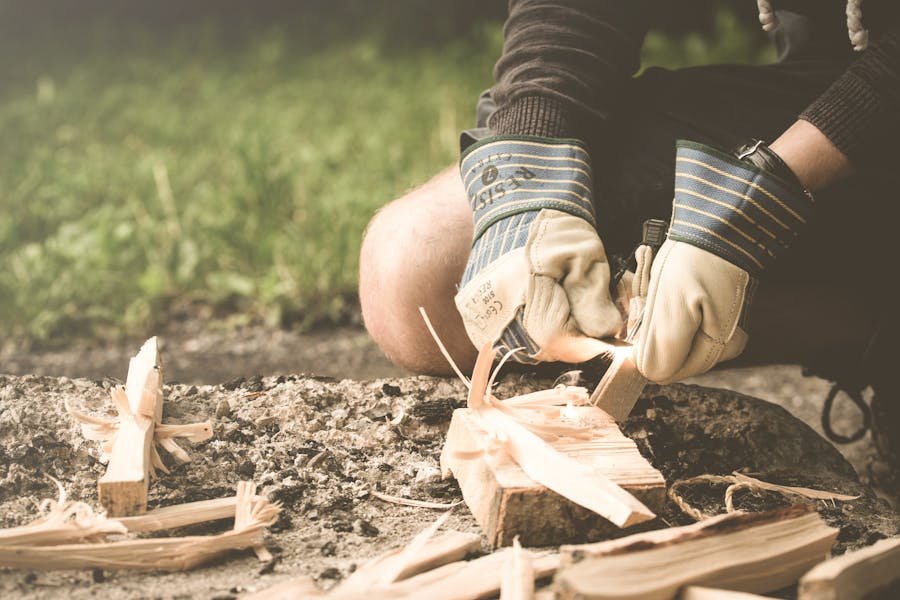
A good fire gives you warmth, light, cooking abilities, and peace of mind. Here’s how to build successful fires in tough conditions:
- Look for spots sheltered from wind and rain
- Get dry materials from high places instead of the ground
- Split big logs to find dry wood inside
- Make feather sticks by carving thin shavings from branches
- Start with small tinder and add bigger fuel as flames grow
You should carry fire starters like petroleum-jelly-soaked cotton balls, waterproof matches, or ferrocerium rods to light fires even in wet weather.
Knot tying for shelter and gear
The right knots can save your life by helping you build shelters, secure gear, and make tools. These simple knot families will serve you well:
- Stopper knots keep rope ends from slipping through holes
- Loop knots attach rope to objects
- Hitch knots wrap around objects
- Bend knots connect rope ends together
You’ll need to know the versatile bowline, trucker’s hitch for tight lines, and taut-line hitch for adjustable tension.
Basic gear repair in the field
Smart repairs need preparation and creativity. Your repair kit should have:
- Tenacious Tape for fabric tears
- Zip ties for broken straps or quick fixes
- Tent pole splints for broken poles
- Multi-tool for various adjustments
- Aquaseal for waterproofing repairs
- Needle and fishing line for stitching
These skills need regular practice before you face real wilderness situations.
Safety and Awareness in the Wild
Survival in the wilderness depends on your knowledge and awareness. Experienced adventurers understand that nature just needs respect.
Wilderness first aid essentials
Your knowledge of simple wilderness first aid could save a life when help is hours away. The wilderness medical skills you need include trauma treatment, bleeding control, and spotting signs of heat-related illnesses.
The foundations of emergency response start with primary assessment (checking ABCs—airway, breathing, circulation). Direct pressure remains your first response to severe bleeding, and wound packing becomes necessary in some cases.
Preparing with Defensive Training
Your best defense outdoors comes from mental preparedness. Safety experts suggest creating “when/then” scenarios that help you rehearse responses to threats before they happen. Keep your head up and your senses alert to maintain awareness of your surroundings. Headphones can block crucial environmental sounds, so it is best to avoid them. The peace of isolation can make you vulnerable, especially near water access points.
For those who want to build even stronger confidence, searching for tactical pistol training near me can connect you with reputable providers such as Tactical Response, where structured instruction helps you develop practical skills to stay composed and capable in unpredictable situations.
Reading weather signs and patterns
Nature warns us about weather changes clearly. Anvil-shaped cumulonimbus clouds tell you thunderstorms are approaching. Animals often predict weather changes – birds fly low and ants hurry around when air pressure drops before storms. On top of that, it’s worth noting how humidity affects scents – natural aromas become stronger right before rainfall. The sun or moon’s haloes reliably indicate moisture high in the atmosphere.

How to handle wildlife encounters
Wildlife deserves space and respect. The national parks’ guidelines suggest staying at least 100 yards from bears and wolves, and 25 yards from other wildlife. Here’s what to do if you meet large animals:
- For bears: Speak quietly, use bear spray if charged, and play dead if a grizzly attacks
- For mountain lions: Stand tall, make noise, and fight back if attacked
- For moose and bison: Keep plenty of distance and find shelter behind objects if charged
Wild animals should never be fed, and babies should be left alone – their mothers might attack to protect them.
Mindset and Self-Reliance
Your mental strength in the outdoors can make the difference between just getting by and truly thriving. Studies show that time spent in nature greatly contributes to happiness and overall well-being.
Developing self-reliance involves several key elements:
- Building confidence through observation: Pay close attention to your surroundings by noticing cloud patterns, animal behaviors, and subtle changes in terrain. This sharpens awareness, strengthens self-trust, and improves decision-making in challenging situations. Observation skills also nurture creativity and critical thinking that carry into everyday life.
- Problem solving in unpredictable situations: Outdoor environments constantly present new challenges. Breaking them into smaller, manageable tasks helps you stay focused and clear-headed under stress. Creative problem solving not only keeps you safe but also strengthens resilience and adaptability that you can apply beyond the wilderness.
- Leadership and group dynamics outdoors: Effective leaders adapt to the group’s stage of development and the demands of the environment. Outdoor challenges highlight different individual strengths and create opportunities for teamwork. When guided well, these group experiences often become the most memorable part of any adventure.
- Maintaining a resilient mindset: Unexpected setbacks are part of any outdoor journey. The ability to stay positive, flexible, and determined in the face of difficulty is a hallmark of true self-reliance.
The Path Toward True Outdoor Confidence
Mastering outdoor skills is not only about survival, it is about creating richer and safer experiences in nature. Every knot you tie, fire you light, or sign you read deepens your connection with the natural world and strengthens your independence. With practice, these abilities shift from simple techniques into habits that shape how you respond to challenges both in the wild and in daily life.
The outdoors will always test your patience, creativity, and resilience. That is where growth happens. As you build on the skills described here, you gain more than practical knowledge. You earn the confidence to step further into adventure, prepared for whatever lies ahead.