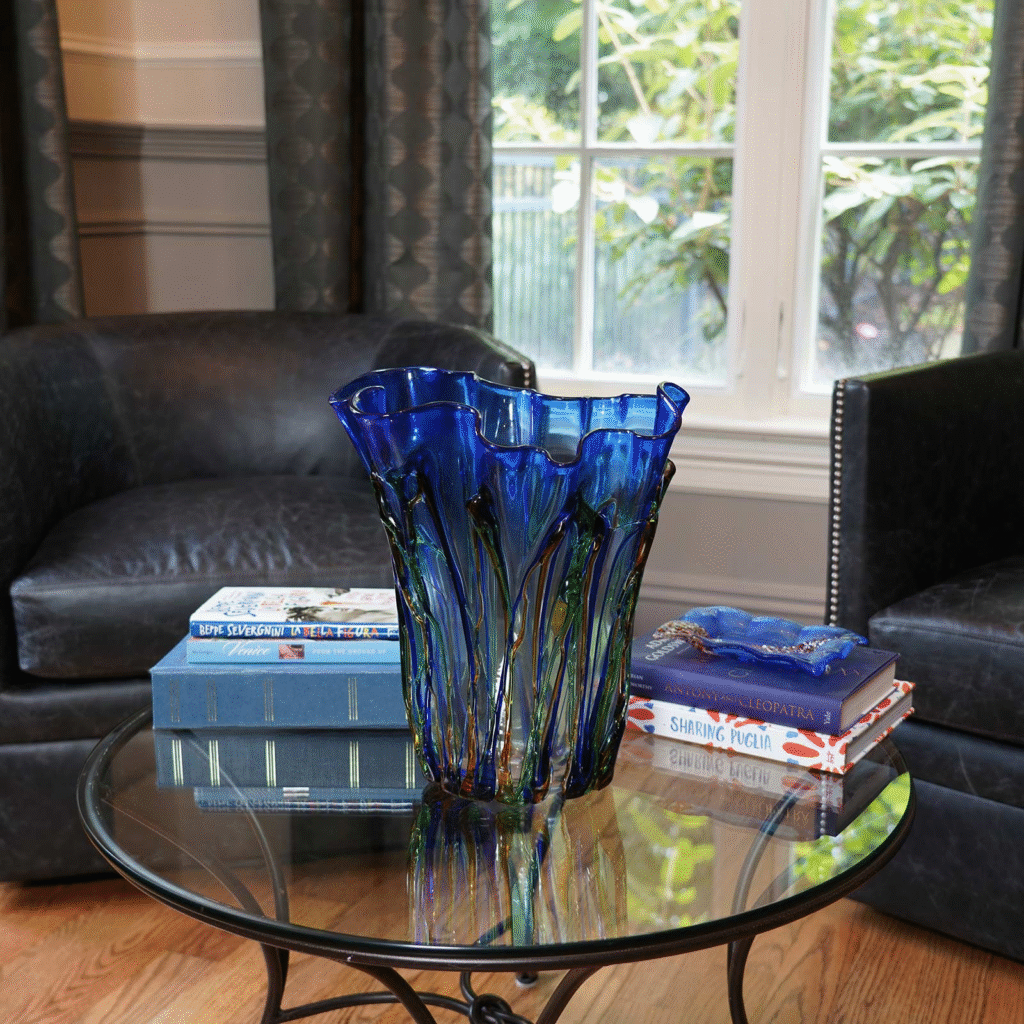
Art glass is in a class of its own. It is beautiful, stylish, and sophisticated. Not considered to be your everyday utilitarian glass; it is artistic creations that range from museum pieces to decorative glassware meant to make your home look more beautiful. Sculptures and figurines, bowls, and vases can be considered art glass as, although it is possible to use them, they can be stunning with an array of colors and exquisite detail.
Although what is known today as art glass has been produced for centuries, it was in the mid-19th century that this art form really flourished, partly due to the desire of Americans to showcase intricate and unusual pieces in their homes.
Many different types of artistic glassware exist. Although glassblowing is one of the most popular methods of producing art glass, other techniques are used. In this article, we will take a look at the most popular techniques and at some famous names in art glass.
History of Art Glass
Glassmaking goes back as far as 3,600 years in ancient Mesopotamia. The blowing method of making glass was invented in the Roman Empire in the 1st century BC. Using this method, they created cups, bowls, and other pieces which were both basic and elaborately decorated, often in interesting shapes. Fast forward to the Middle Ages, and some of the highlights of decorative glass art are the stained-glass windows in Gothic churches and cathedrals.
During the Renaissance, the island of Murano in Venice, Italy, was known as the center of European glassmaking. The artisans there developed new techniques, such as gold leafing, filigree, and murrina (millefiori), all of which were used to produce beautiful glassware. While most pieces were functional, used for banquets or basic household needs, some pieces were purely decorative and can certainly be considered art glass.
The Industrial Revolution occurred in the 19th century, and with it, the mass production of glass. However, the Arts and Crafts Movement ensured that handcrafted glass was still created.
The art glass period began in the 19th century and replaced the Victorian Brilliant Period, during which glass pieces were heavily decorated. In the early 20th century, the most popular art movements were Art Nouveau and later Art Deco, which made their way into the world of art glass.
Types and Techniques of Art Glass
Blown Glass
Glassblowing is one of the most popular ways of making artistic glassware and takes great craftsmanship. To create an object using this technique, the glass ingredients are heated in a furnace to a temperature of 2000°F. A blowpipe is then used to blow air into the glass to form the desired shape.
He or she can then manipulate the glass with tools to make more intricate designs and textures. During this procedure, heat is applied from the reheating chamber so that the glass does not harden before the designs have been completed. Once the artist is done, the piece is placed in the annealer to cool. It is set to cool slowly, otherwise, the glass could later break from internal tension.
One of today’s glass-blowing masters is Dale Chihuly, who has created the spectacular sculptures, Pacific Sun and the Glasshouse Sculpture in Chihuly Garden and Glass, Seattle, Washington State.
Stained Glass
Although you may think of stained glass when you imagine churches from the Middle Ages, this type of art glass has experienced a revival in the last couple of centuries. Stained glass is stunning, especially when light shines through it, and nowadays, it also enhances public buildings and even private homes.
There are different ways to create stained glass. The most common technique is to fire sand and potash at a high temperature. To color the glass, metallic oxide coloring agents, including copper and cobalt, are added. The artists then cut the molten glass into the shapes they want for their design and grind the edges. The pieces are held together with lead strips, and the design can then be enhanced with paint.
Stained glass still enthralls the public. It needs accomplished artists who are also craftsmen to produce it as it is an intricate process, but the results are worth the effort.
Fused Glass
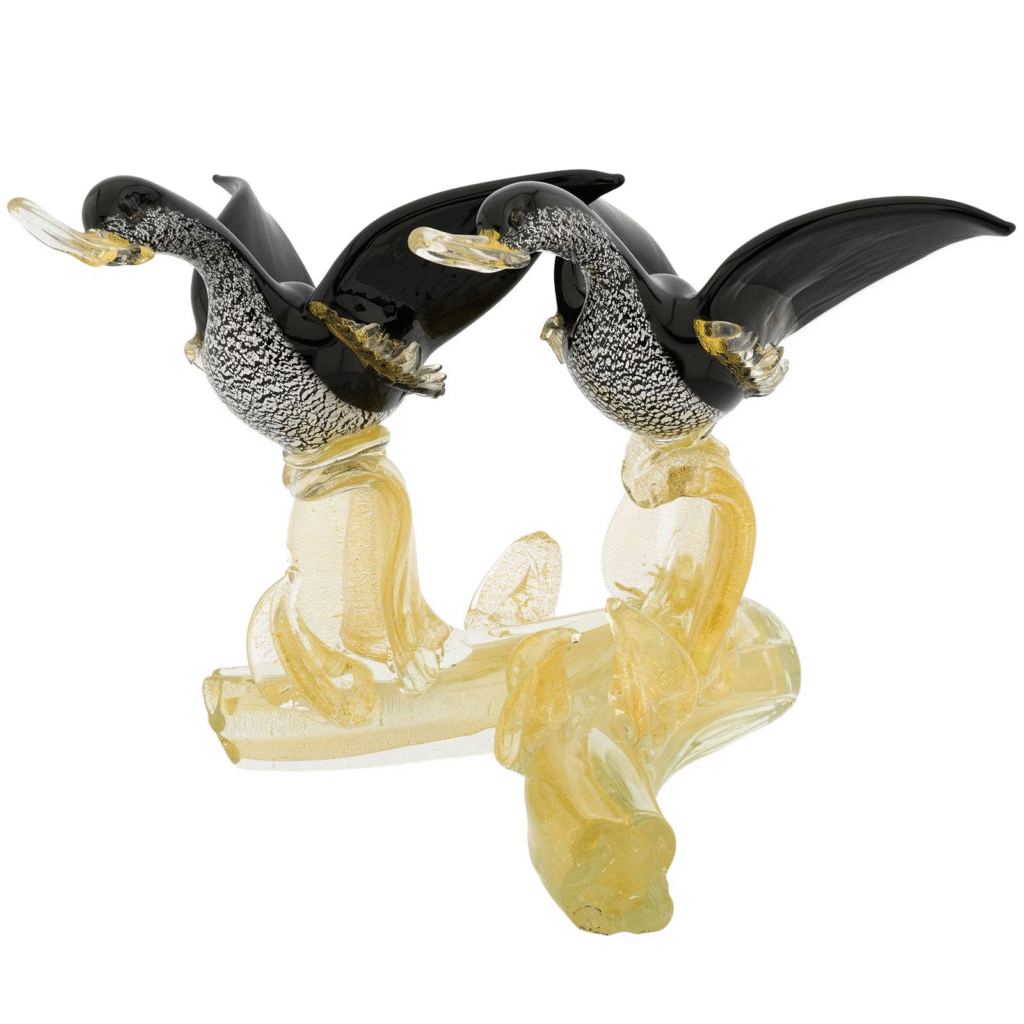
Fused art glass has amazing colors and complex designs. The procedure to create this type of glass is intricate, where multiple pieces of glass have to be joined together in the kiln. The artisans need to place them correctly so that they fuse in the desired pattern. All this happens at very high temperatures with the glassmakers watching closely so that they get the right consistency. Once fused, the resulting object must be cooled slowly to stop the glass from cracking. Fused glass is mainly used to make artistic tiles, wall hangings, jewelry, and bowls.
Flame-Worked Glass
Flameworking (previously known as lampworking because oil-fueled lamps were used in the process) became popular in the 14th century and was revived in the 19th century. In this technique, a flame from a torch heats rods and tubes of glass. The glass becomes soft and can then be formed into the desired shapes.
Flame-worked glass was favored in 19th-century France and was used primarily to make paperweights. The flame was used to form flowers, fruit, or animals which were then put into a glass dome. These paperweights are still popular today and are sought after by collectors.
Cast Glass
Cast glass has been a popular technique in glassmaking since the 5th century BC when it was used in Ancient Egypt and Mesopotamia. With the rise of art glass in the 19th century, it became popular as a technique that is still used today.
The procedure involves pouring molten glass into a mold made from plaster or metal, where it cools and solidifies. Once it is a solid piece, it is removed, and then the artisan polishes or engraves it. Complex designs can be created in many different colors. It is used to make a wide range of objects, from small decorative pieces to large architectural installations. One of the qualities of this type of art glass is its ability to diffuse light, creating stunning visual effects.
Cold Glass
Cold glass is a technique that does not use heat. Once the initial glass shaping has taken place, the glass is cooled to a temperature less than its annealing point. The glassmakers then cut the cold glass into the shapes they want using saws and diamond blades.
The edges are smoothed by grinding, and then the piece is polished, giving a shiny surface. Sometimes the artists will paint their creations which leads to a colorful piece, or they may sandblast to add texture. Stained glass and mosaics are sometimes created using this technique.
Knitted Glass
Knitted glass is a new technique of art glass that has only been used by a few artisans so far. The most famous person to create knitted glass is Carol Milne, who lives in Seattle and has been creating it since 2006.
Making knitted glass is an intricate procedure. Carole Milne starts by knitting a wax sculpture that can be used in hot temperatures. Steam is used to melt the wax, which leaves a space inside the mold. Room-temperature glass is put into the mold and then heated to 1400 – 1600 F.
It is then slowly cooled, and afterwards the glass is looped around needles to form the final product. Carol Milne has created some amazing sculptures, some even with hands that are knitting. This method is a unique and exciting way of producing art glass.
Broken Art Glass
Broken art glass is a simple procedure where the artisans use pieces of broken glass to create the object. They use substances such as epoxy resin, clear silicone, or special glass glues to fix the pieces together. This is one of the best ways to create mosaics, which are found on floors, walls, and home decor.
Slumped Glass
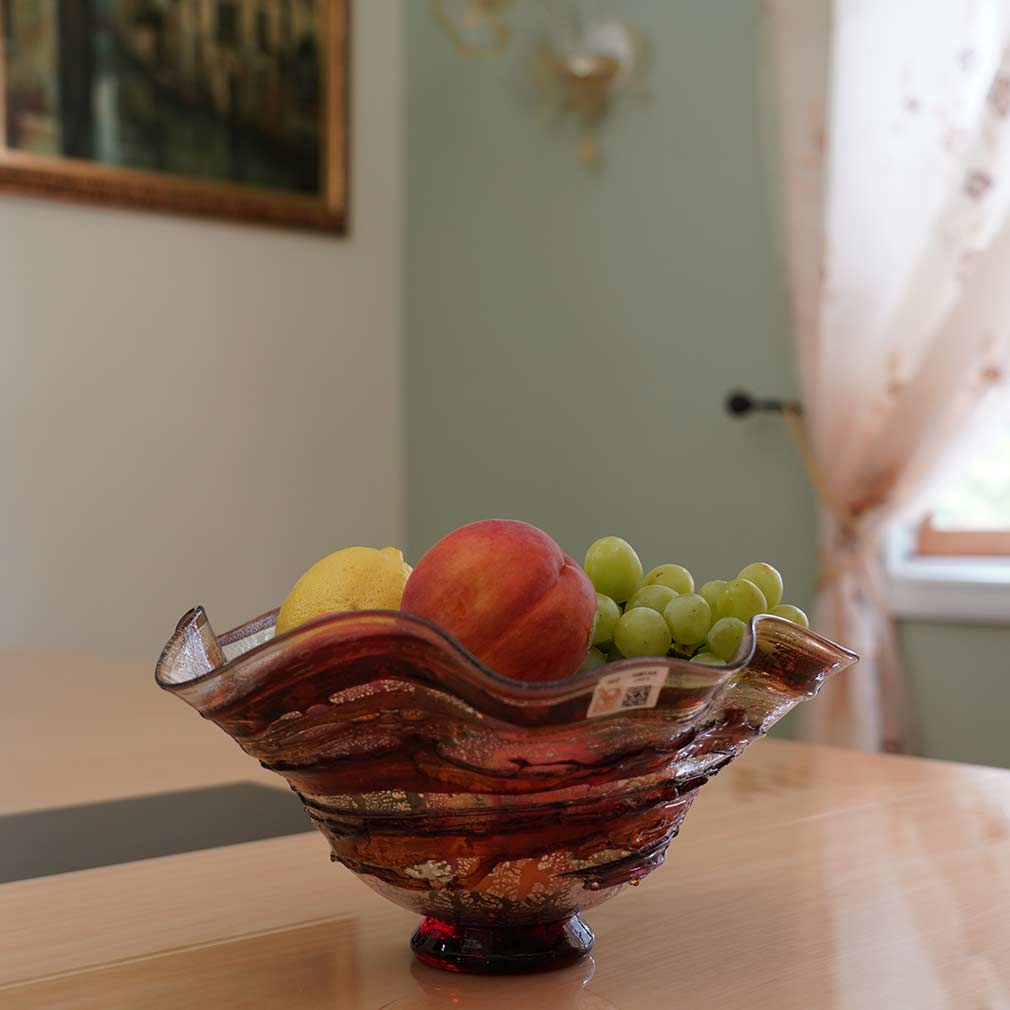
Glass slumping produces stunning artistic glassware with sweeping curves and graceful designs. It is an exact procedure that is used to create platters, bowls, garden art, and decorative art. To make the piece, the artisan puts the glass on top of a heat-resistant mold made from ceramic or metal.
Kiln-formed glass and fused glass are both suitable for slumping. When the kiln temperature reaches 1300°F F the glass starts to bend, and when the glass reaches the shape the artisan wants, it is annealed and brought back to room temperature. The glassmaker removes it by using a release agent, such as boron nitrate.
Etched Glass
Glass etching was developed in the mid-19th century to enhance all forms of art glass. It is a precise procedure and needs a steady hand and a great amount of skill. It is a technique that takes place after the glass has been blown or cast and involves creating artwork on the surface of a glass object.
First, the glass is cleaned to make sure that it is smooth, and then the design is outlined on the glass with a stencil. The glass is then etched with a caustic, acidic, or abrasive substance and finally polished for a smooth surface.
Gold Glass
Gold glass is an opulent type of artistic glassware that goes back as far as the Hellenistic period of 323 – 30 BC. Gold glass is expensive because real gold particles are added to the glass mixture. Sometimes a decorative design is fused between two pieces of glass, or a single piece of glass is gilded on the back. The final effect is breathtaking, as when light flows through the object, it shimmers.
Gold glass is sought after by collectors because of the craftsmanship needed to produce it. You can find all types of art glass with gold leaf including jewelry, bowls, vases, candle holders, and sculptures. It is very much a signature of many Murano glassmakers.
Lead (Crystal) Glass
Lead glass is so called because lead oxide replaces the normal calcium content of the glass. Manufacturers use more than 24% oxide to create a stunning effect, and if the lead oxide level is more than 35%, the lead (or crystal) glass will sparkle. This type of glass also refracts light, so when it is held up to the light, you will see a rainbow of colors.
To make crystal pieces, the artisans mold the lead glass into the shapes they want by using such procedures as glassblowing and pressing. When cool, they polish the glass so that it is clear and reflective. Because it takes great craftsmanship to create and because it is stunning, it is often used to make artistic glassware. It is popular with collectors for these reasons and also because its weight gives it a feeling of affluence.
Masters of Art Glass
Tiffany
Louis Comfort Tiffany, the son of Charles Lewis Tiffany who founded the famous jewelry company, Tiffany & Co., was more interested in stained glass and opened a glassmaking studio in 1878 in New York City, which he called Tiffany Studios. It was active until 1930, three years before he died. Here he worked with other famous designers of the time, including Frederick Wilson, Clara Driscoll, and Agnes F. Northrop.
Louis Comfort Tiffany’s work was outstanding, and he elevated glass to a thing of beauty. He first produced stained glass and mosaics, but then added lampshades, which became famous for their vibrant colors, their jewel-like appearance, and their elaborate bronze stands. Many of the lamps were floral in design with dragonflies, butterflies, and colorful flowers. Some were geometric shapes, and others were globe-shaped. His products were not mass-produced but created by skilled glassmakers who were artists in their own right.
In 1894, Louis Comfort Tiffany created the Favrile glass technique, a type of glass that gives an iridescent effect. However, it is more spectacular than most iridescent glasswork because instead of coloring the glass with paints and enamels, Tiffany melted the colors into the glass.
The glass was heated at a temperature of 2400°F, with metallic oxides being used to make sure that the colors were fully absorbed. Random colors were produced, with free-flowing patterns and a reflected light never seen before. These pieces are still highly valued and sought after by collectors. Favrile glass was used to make vases, bowls, lamps, and windows, amongst other decorative items.
Steuben Glass
Steuben Glass was founded in 1903 by Frederick Carder and Thomas G. Hawkes in Corning, New York, in Steuben County. It is now owned by Corning Incorporated and only the Corning Museum of Glass is allowed to sell new pieces of Steuben glass.
When Steuben Glass opened, it produced colorful Art Nouveau glass which was popular at the time. Carder created an iridescent glass called Aurene which was dazzling and bright and which radiated more light than it absorbed. The favorite colors were blue and gold, paired with white, green, or red.
However, because Carder’s designs did not move with the times, Sidney Waugh replaced him in 1933, and he got rid of colors and produced clear crystal. Since 1955, the company has produced only artistic glassware, not pieces that can be used every day.
Kosta Boda
Kosta Boda is a Swedish company founded in 1741, making it one of the oldest working glass companies in the world. At first, it produced mainly chandeliers, drinking glasses, and windowpanes, but from 1897, they have produced art glass, hiring famous artisans such as Gunnar Gunnarson Wennerberg. The company merged with another famous Swedish company, Orrefors, in 1990 and became part of the Royal Scandinavian Group in 1997.
American Studio Glass
When the Industrial Revolution occurred in the 19th century, small studios started to disappear and while some still existed, much of the glass produced was in large factories. However, this changed in the 1960s when the American Studio Glass movement was started by a workshop led by American artists Harvey Littleton and Dominick Labino at the Toledo Museum of Art. They encouraged glass to be created in studios again, and this allowed artisans to work in innovative ways to create artistic glassware and not batch-produced factory glass.
Murano Glass
Glass has been produced on the island of Murano in Venice since the 13th century and although production declined in the 17th and 18th centuries, it experienced a revival in the 19th century. The glass produced in Murano is handmade, with glass blowing being the most common method used.
Both utilitarian and art glass are produced, although the glass you can use is so beautiful that it can be called artistic. Different techniques are applied, such as Cristallo, which creates dainty pieces with thin walls, Smalto or enameled glass, and Aventurin,e which produces a shimmering glow and reflects light. Millefiori glass is beautiful as it looks like it is covered with a field of flowers.
Royal Leerdam Crystal
Royal Leerdam Crystal was founded in 1878 but is now owned by Dutch Andes Invest Industrie Funds. It produces both art glass and utilitarian glassware. Many famous designers have worked for Royal Leerdam Crystal, including Andries Dirk Copier, Hendrik Petrus Berlage, and Willem Heesen. Copier was the most famous and worked there from 1914 – 1971. He designed and created decorative objects as well as the famous wine glass, the Gilde Glass, which he created in 1931 and is still made today.
Galle
Emile Galle was born in 1846 and was a prime mover of the Art Nouveau style and the revival of French artistic glassware. At first, he created enameled and cameo glass which were designed with nature scenes. The glass he produced then was clear with a light tint.
Later, he started embedding small pieces of glass into larger ones, many with plant motifs and natural scenes, and he also tried out deep colors. He eventually opened a factory to mass-produce his piece,s and he became the largest glass producer in France. He died in 1904, and while the factory closed during World War I, it reopened, only to shut its doors for good in 1931.