When most travelers picture Bangkok, they imagine a neon-lit sprawl of gridlocked traffic, towering skyscrapers, and bustling night markets. It is known as a concrete jungle for a reason. But for the urban explorer with a curious mind, there is a literal jungle hiding beneath the smog. Thailand’s capital is a city of stark contrasts where ancient nature fights for space against modern development.
If you are willing to look past the shopping malls and Samala Hotel Bangkok rooftop bars, you will find a landscape rich in biodiversity, hidden waterways, and untamed green spaces. This is not the Bangkok shown in standard tourist brochures. It is a humid, vibrant ecosystem waiting to be explored by those ready to venture off the beaten path.
Establishing a Strategic Basecamp
Urban exploration in Bangkok is not for the faint of heart. The heat is intense, the humidity is relentless, and the sensory input can be overwhelming. Before you trek into the thick of the green zones, you need a strategy for recovery. Having a reliable base of operations is crucial for any expedition, even an urban one.
Situated in a prime location for access to both the city’s transport links and its hidden gems, the Samala Hotel Bangkok serves as the ideal basecamp. It offers the modern amenities required to rest your legs and review your footage from the day, ensuring you are fresh enough to head back out into the chaos the next morning. Once you have your sanctuary secured, you are ready to tackle the wilder side of the city.
An Urban Oasis
Just across the Chao Phraya River lies a place that feels a world away from the gridlock of downtown. Bang Krachao, known locally as the “Green Lung,” is an artificial island formed by a sharp bend in the river. Unlike the rest of the city, this area has escaped the clutches of high-rise developers due to strict conservation regulations.
Visiting Bang Krachao is like stepping back in time. The area consists of dense mangroves, papaya groves, and traditional wooden stilt houses. The best way to explore is by renting a bicycle and navigating the maze of narrow, elevated concrete paths that wind through the canopy. It is a thrilling ride that requires focus, as one wrong turn could land you in the muddy swamp below.
This area is vital for the city’s ecosystem. Often referred to as the Green Lung of Bangkok, this 16-square-kilometer island offers a preserved slice of traditional Thai jungle life just minutes from the city center. It acts as a massive air purifier for the metropolis. Spending a day here fills your lungs with fresh oxygen that is hard to come by downtown.
While exploring the elevated paths, keep your eyes peeled for local fauna. It is common to spot:
- Vibrant Stork-billed Kingfishers hunting in the canals
- Large Reticulated Pythons coiled in the branches (best admired from a safe distance)
- Rare butterflies and insects native to the central plains
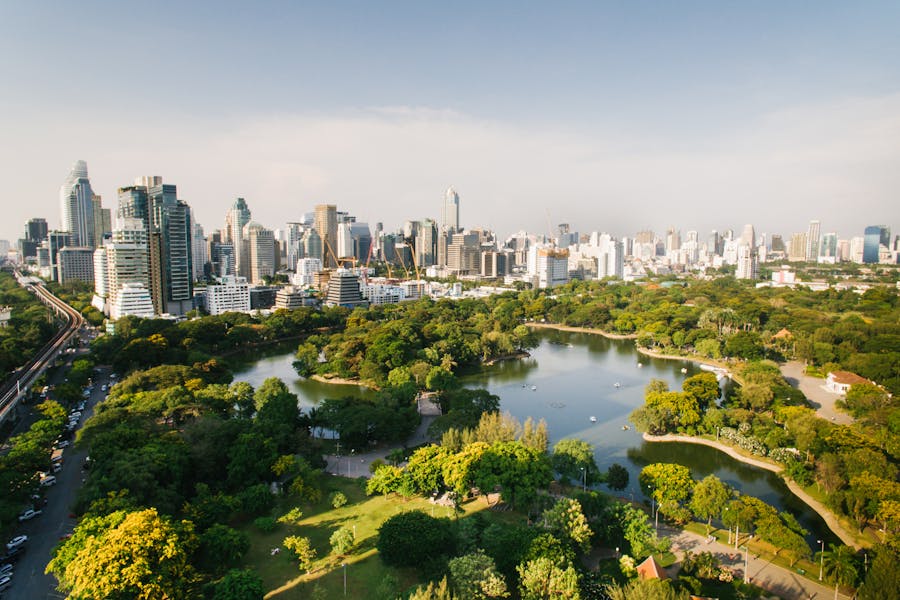
Prehistoric Neighbors in Lumphini Park
For those who want a wildlife encounter without leaving the city center, Lumphini Park offers a surreal experience. While it serves as a popular spot for joggers and tai chi practitioners, the park’s most famous residents are the Asian water monitor lizards.
These are not small geckos. Growing up to two meters in length, these prehistoric-looking reptiles roam freely across the lawns and swim in the artificial lakes. To the uninitiated traveler, seeing a creature of this size casually strolling past a park bench can be a shock. However, they are generally scavengers and mostly ignore humans if left alone.
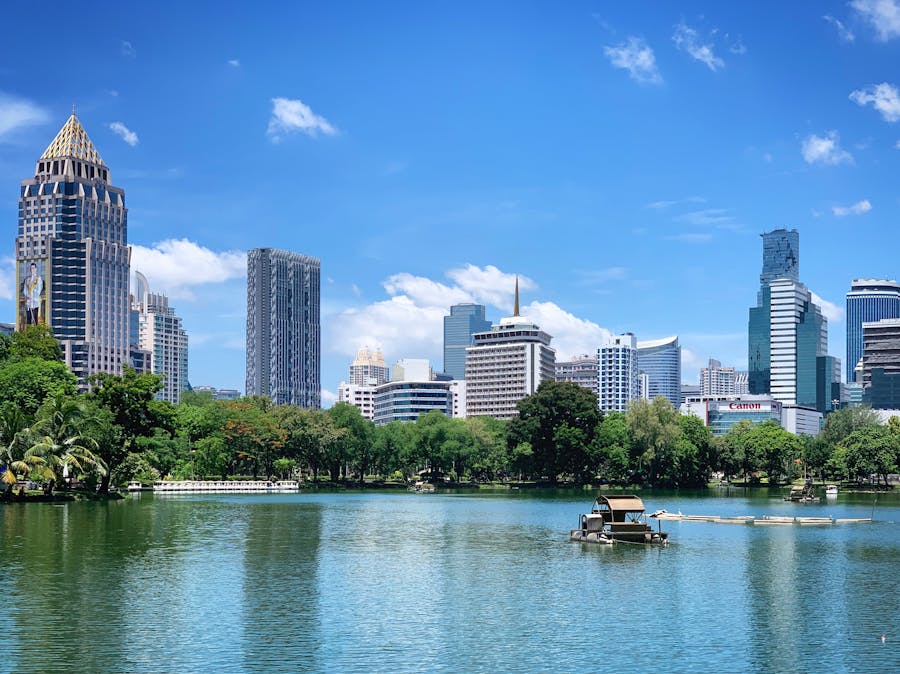
Observing these lizards against a backdrop of glass-and-steel office towers encapsulates the essence of Bangkok. It is a city where nature refuses to be fully tamed. Watching a monitor lizard drag its heavy tail into the water while the Skytrain rumbles overhead is a vivid reminder of the wild resilience of this region.
Capturing the Contrast
Documenting the wilder side of Bangkok presents a unique challenge for photographers. The lighting conditions can be difficult. You must manage the shift from the harsh midday sun reflecting off skyscrapers to the deep, dappled shade of the mangrove forests. You are constantly balancing the grit of the city with the softness of nature.
As you trek through the dense mangroves of Bang Krachao, you will want to capture the unique contrast of jungle greenery against the distant city skyline. If you are looking to improve your shots in these complex environments, check out our guide on Nature Photography to help you frame these wild urban moments effectively. Mastering the rule of thirds can turn a chaotic jungle scene into a compelling story of urban survival. Bangkok rewards those who venture off the beaten path with a wild adventure that rivals any trek in the remote wilderness.