Animals develop pink noses for a variety of reasons, including low pigmentation, environmental adaptation and simple genetic variation. Pink noses appear across mammals, birds and even some reptiles, making them an appealing and distinctive feature.
In many species, the colour of the nose can signal age, breeding condition or health. Below are ten animals known for their naturally pink noses, each with its own unique story.
10 Animals with Pink Noses
1. Domestic Pig
- Scientific name: Sus scrofa domesticus
- Type: Mammal
- Conservation status: Not evaluated (domestic animal)
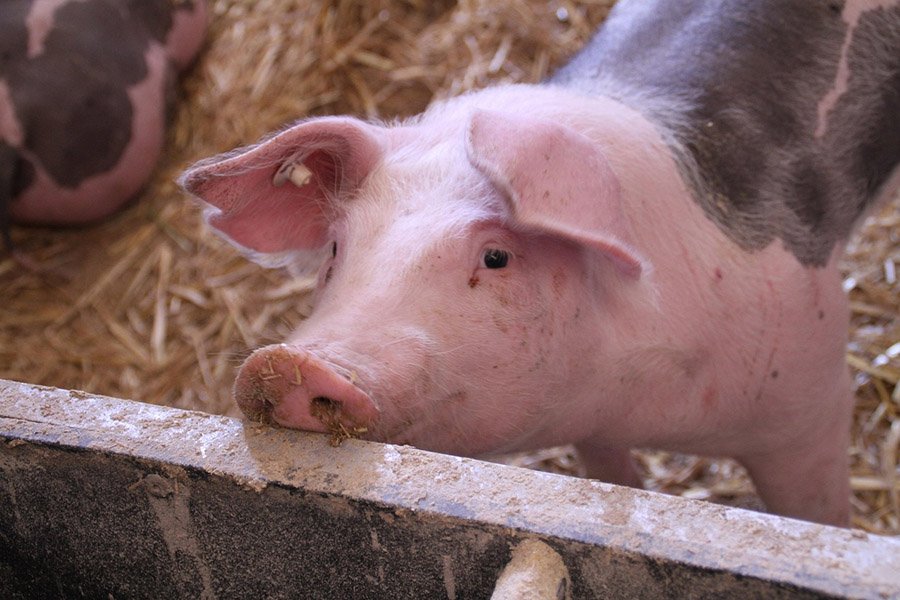
Domestic pigs are perhaps the most iconic animals with pink noses. Their soft, fleshy snouts are highly sensitive and packed with nerve endings, allowing them to root through soil in search of food.
Selective breeding has reduced pigmentation in many breeds, making the nose appear bright pink. The snout is essential for social behavior and communication, as pigs investigate their surroundings through scent and gentle nudging. Despite their stocky appearance, pigs are intelligent, curious and deeply reliant on their noses to interpret the world around them.
Did you know? Pigs have a sense of smell stronger than that of dogs, and some are trained to detect truffles.
2. Opossum
- Scientific name: Didelphis albiventris
- Type: Mammal
- Conservation status: Least Concern
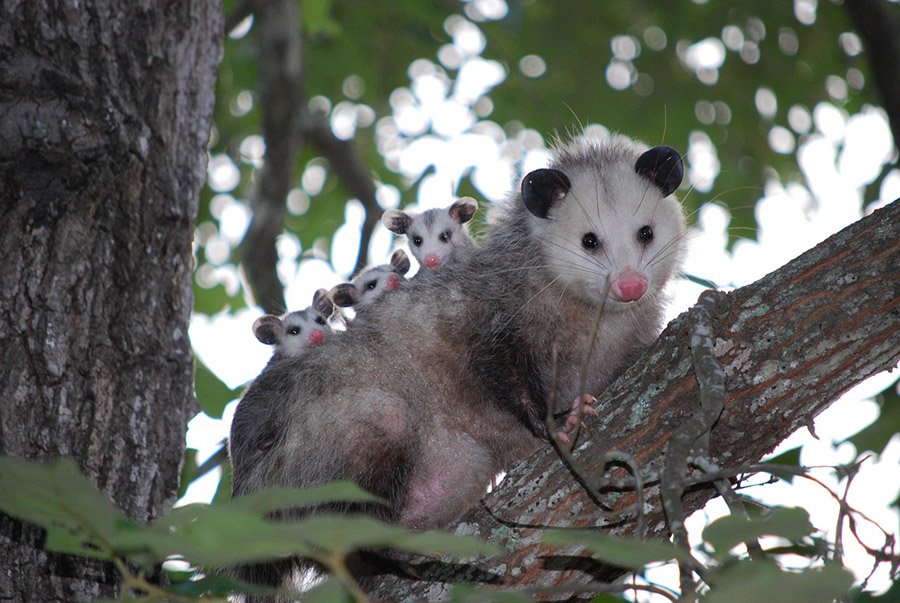
Many opossums have a prominent pink nose that contrasts sharply with their grey or dark fur. Their noses are soft, flexible and extremely sensitive, helping them locate food at night since they rely more on smell than sight.
As omnivores, they use their sense of smell to find insects, fruit, small animals and carrion. Juvenile opossums often have the pinkest noses, which may darken slightly with age. Their nasal sensitivity is also useful for navigating cluttered forest floors and avoiding danger.
Did you know? Opossums have impressive immunity to snake venom and can survive bites from species that would kill most mammals.
3. Mole
- Scientific name: Talpidae family
- Type: Mammal
- Conservation status: Varies by species
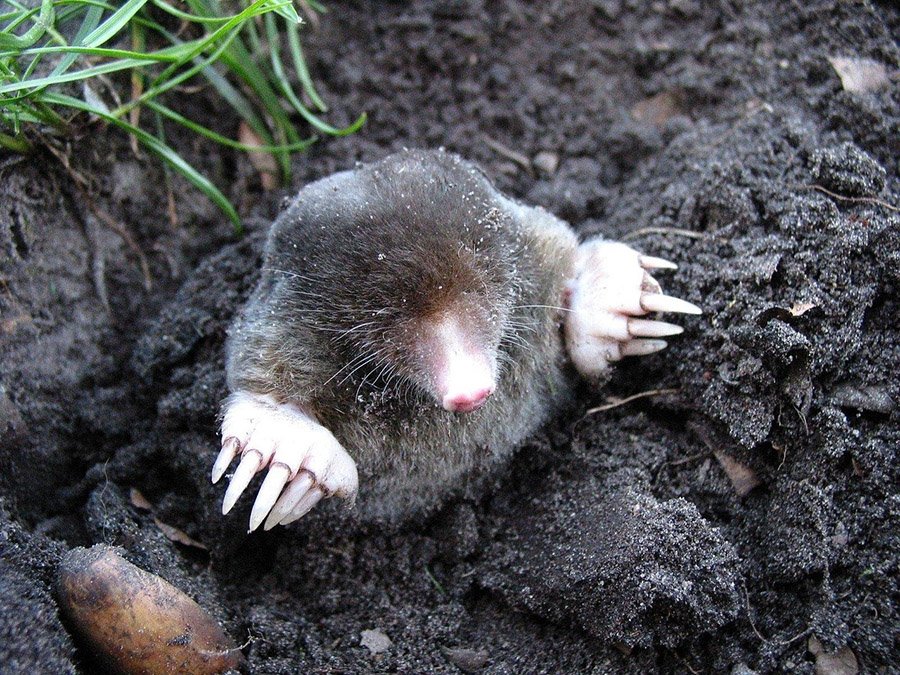
Many mole species have pale pink noses adapted for life underground. Their noses are incredibly sensitive, allowing them to detect vibrations and chemical cues in the soil. Some species, like the star-nosed mole, use their nasal structures to gather information faster than a human eye can process.
Because they live in total darkness, their noses compensate for limited vision by functioning as both a sensory detector and a digging tool. Their pink nasal skin is usually hairless, revealing blood vessels underneath.
Did you know? The star-nosed mole is one of the fastest foragers on Earth, identifying food in under a quarter of a second.
4. Sugar Glider
- Scientific name: Petaurus breviceps
- Type: Mammal
- Conservation status: Least Concern
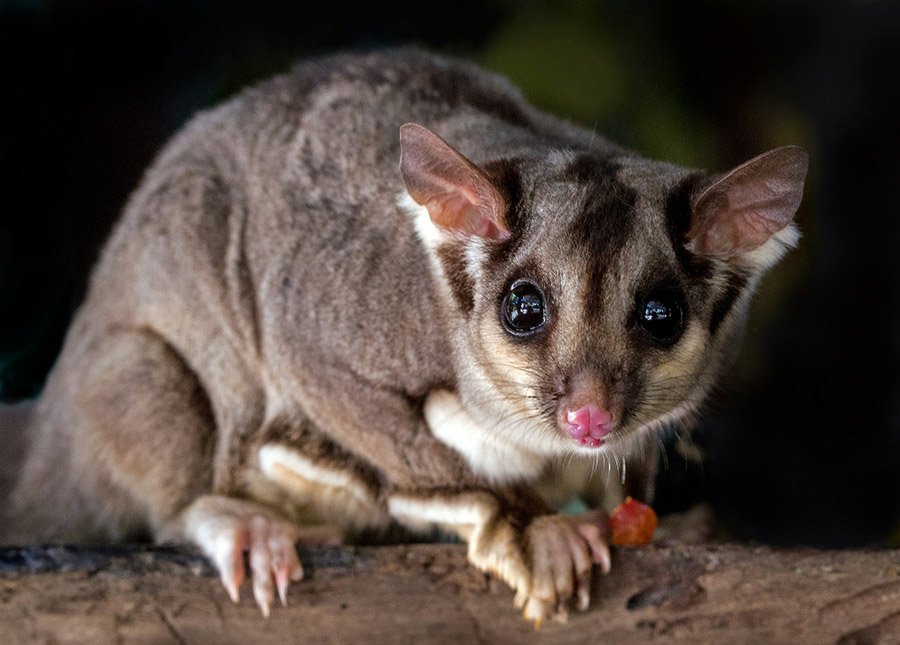
Sugar gliders have a delicate pink nose set against their soft grey fur, giving them an expressive and endearing look. As nocturnal gliders, they depend heavily on scent communication within their social groups.
Their pink noses help them identify colony members, mark territory and navigate through trees at night. The color comes from their naturally pale nasal skin, which is thin enough to show underlying blood flow. Despite their small size, sugar gliders travel long distances by gliding between branches using a membrane that stretches along their sides.
Did you know? Sugar gliders can glide up to 50 metres in a single leap.
5. Colugo
- Scientific name: Galeopterus variegatus
- Type: Mammal
- Conservation status: Least Concern
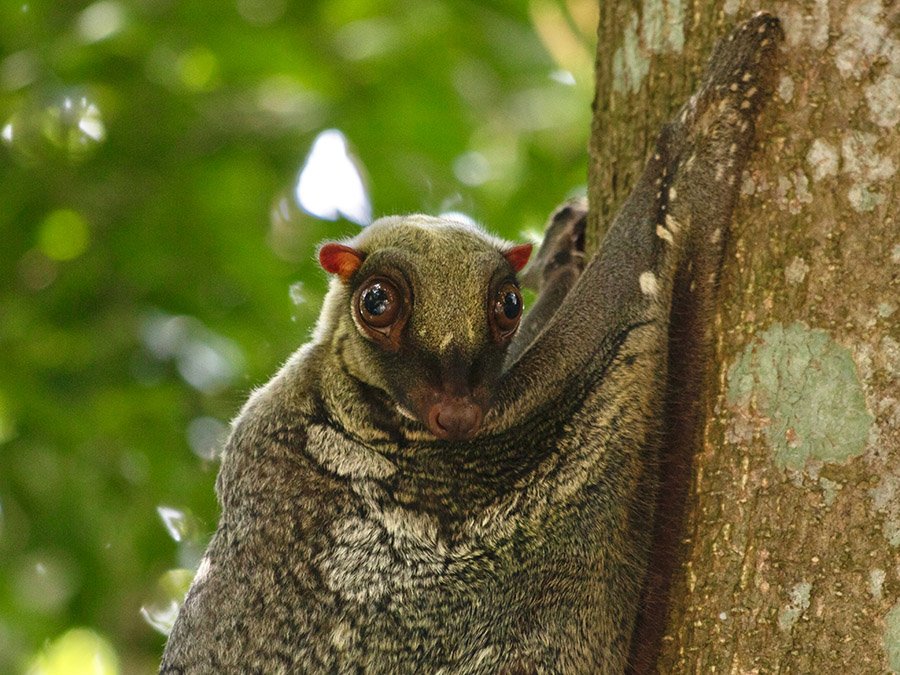
The colugo, sometimes called a “flying lemur” though not a lemur at all, has a gentle pink nose that adds to its unusual appearance. Native to Southeast Asia, colugos are expert gliders that move silently between trees using a wide membrane stretching from their neck to their tail.
Their pink noses are highly mobile and help them detect scents from leaves and sap, which make up much of their diet. Their large eyes provide excellent night vision, while the nose offers fine-tuned sensitivity for life in dense forest canopies.
Did you know? Colugos are the most skilled gliders among mammals and can glide over 100 metres in a single descent.
6. Domestic Cat
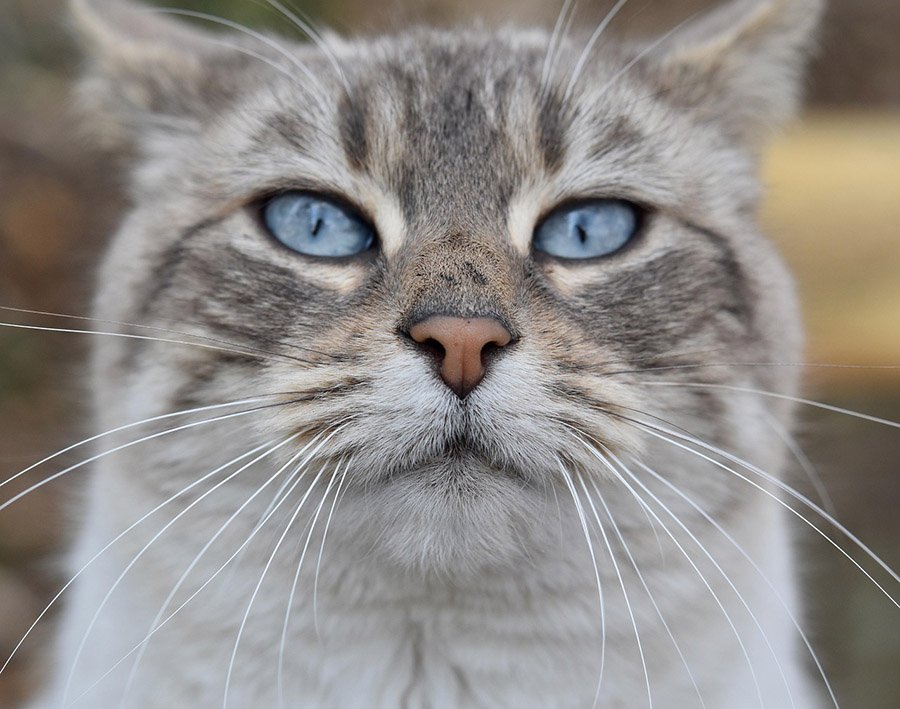
- Scientific name: Felis catus
- Type: Mammal
- Conservation status: Not evaluated (domestic animal)
Domestic cats come in many colours, but individuals with pale fur often have naturally pink noses. The nose is a key sensory organ, containing millions of smell receptors that help cats identify territory, food, companions and potential threats. A pink nose may change shade slightly depending on temperature or emotional state, becoming lighter or darker throughout the day.
Because the skin is delicate, it is more prone to sunburn, especially in white cats. Cats also use their noses to greet each other through gentle nose touches, a behaviour tied to social bonding.
Did you know? Cats have about 200 million scent receptors, far more than humans, making their sense of smell remarkably acute.
7. Proboscis Monkey
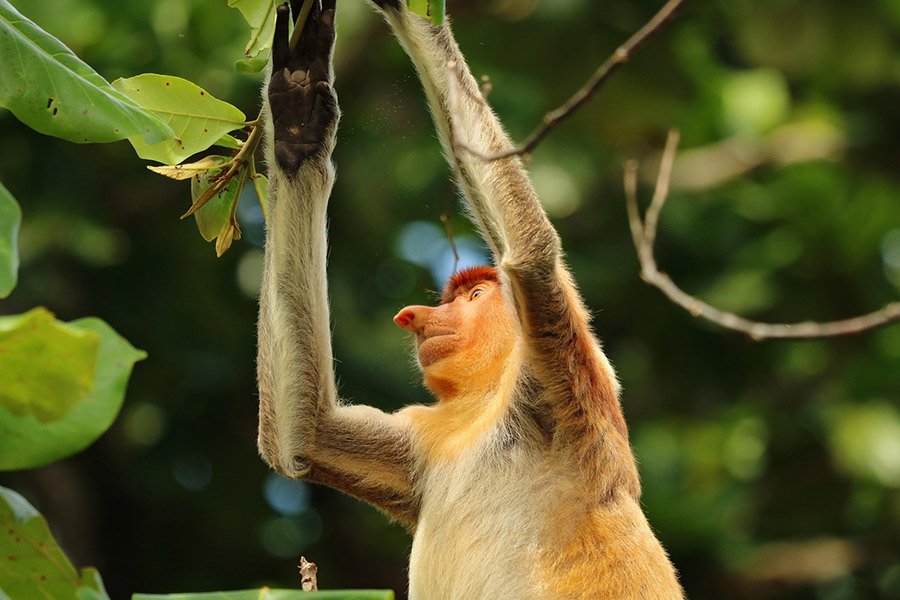
- Scientific name: Nasalis larvatus
- Type: Mammal
- Conservation status: Endangered
Proboscis monkeys are easily recognised by their large, protruding noses, which often have a pinkish tone. Males have especially long noses that may enhance vocal calls and attract mates.
Although the rest of their face is reddish-brown, the nose commonly appears pale pink due to its thin skin and rich blood supply. These monkeys live in the mangrove forests of Borneo, where their noses help amplify honking calls that communicate across dense habitats. The pink coloration is most evident during social displays and vocalization.
Did you know? A dominant male’s long nose can grow up to 10 centimetres and acts as a natural resonating chamber.
8. Tiger
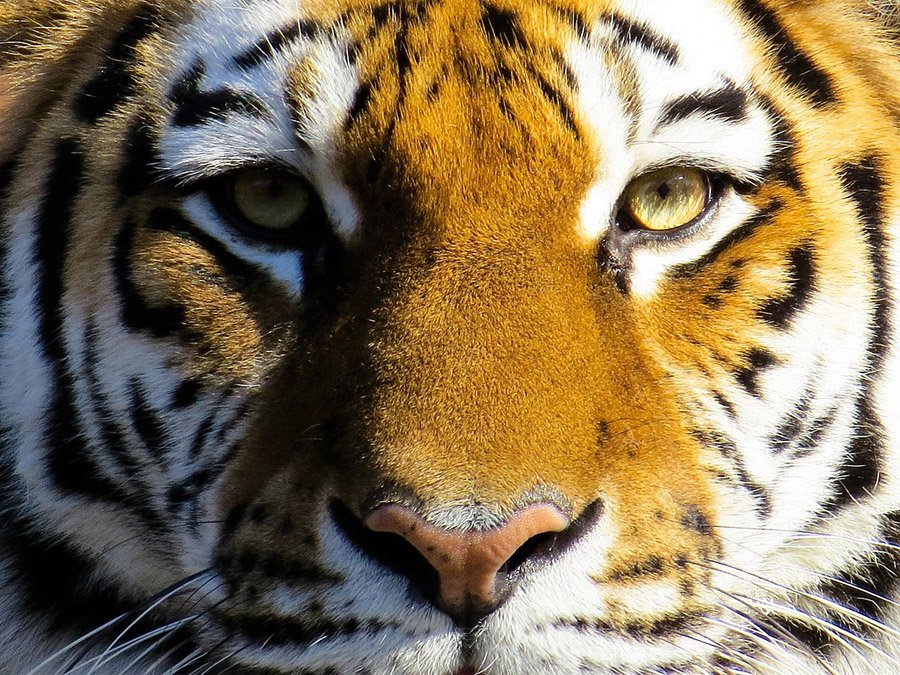
- Scientific name: Panthera tigris
- Type: Mammal
- Conservation status: Endangered
Many tigers have a soft pink nose, sometimes bordered by darker skin around the edges. The pink shade varies by individual and can darken with age or sun exposure.
Tigers rely heavily on scent marking to define territory, and their noses play a crucial role in detecting chemical signals left by other tigers. Despite their fierce appearance, the nose is surprisingly delicate and expressive, often appearing brightest in cubs. The pink color comes from reduced pigmentation on the nasal pad, contrasting with their bold orange-and-black fur.
Did you know? A tiger’s sense of smell helps it identify territory boundaries even when another tiger has passed through days earlier.
9. Chipmunk
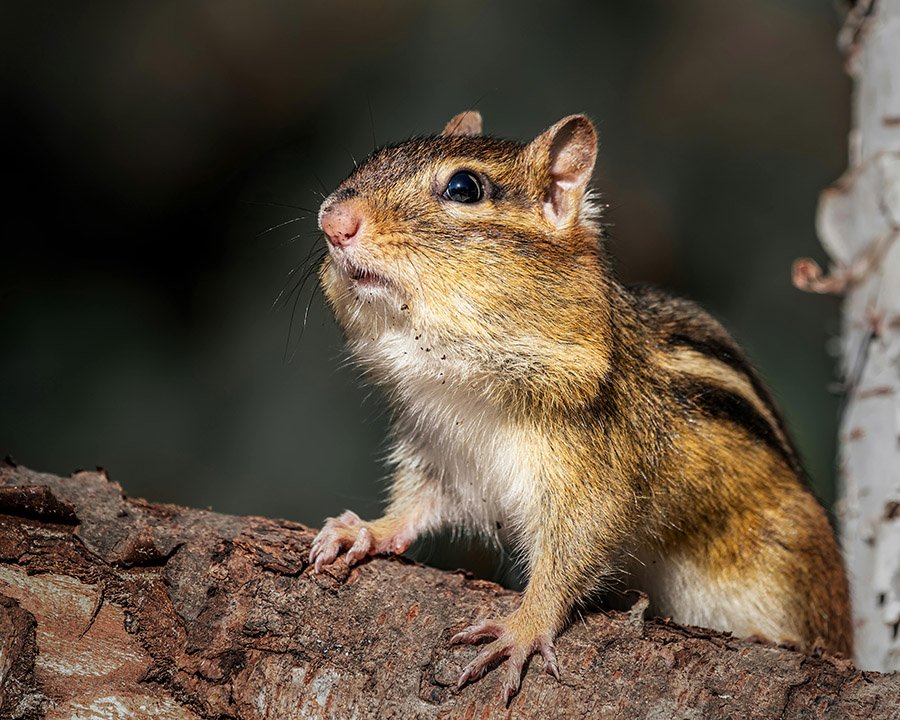
- Scientific name: Tamias spp.
- Type: Mammal
- Conservation status: Most species Least Concern
Chipmunks are easily recognised by their striped backs and small, bright pink noses. Their noses are essential for locating stored food, detecting danger and navigating the forest floor.
Because they spend much of their time foraging for nuts, seeds and fruit, their nasal sensitivity helps them detect subtle scent cues. Chipmunks also use their pink noses in social behavior, touching noses when greeting or when determining the identity of another chipmunk. The skin is pale and lightly pigmented, which is why the nose appears distinctly pink.
Did you know? A single chipmunk can store thousands of nuts in its burrow for winter survival.
10. Red Squirrel
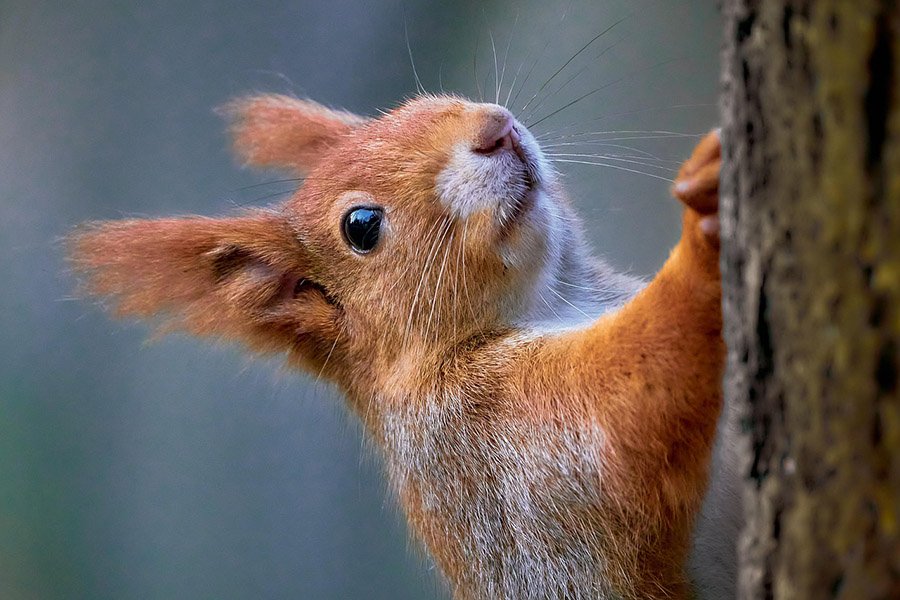
- Scientific name: Sciurus vulgaris
- Type: Mammal
- Conservation status: Least Concern (declining in some regions)
Red squirrels often feature a small pink nose that stands out against their reddish-brown fur. Their noses are essential for identifying food sources and for recognising scent markings in their territory. Red squirrels rely heavily on smell to find hidden caches of nuts and to judge whether a food source is fresh or safe. The pink colour of the nose reflects thin skin with limited pigmentation. Their expressive noses often twitch rapidly as they assess their surroundings.
Did you know?
Red squirrels create hundreds of small food caches each season to reduce the risk of losing everything to predators or competitors.
Why Do Some Animals Have Pink Noses And Others Don’t?
Pink noses usually appear when the skin on the nose has little or no pigmentation. This allows the underlying blood vessels to show through, giving the surface a pink colour. Genetics is the main driver. Some species naturally have pale nasal skin, while others only show pink noses in certain colour morphs or during early life stages.
Temperature can also influence the appearance of a pink nose. In cold weather, reduced blood flow can make the nose look lighter, and in warm weather it may appear more flushed. Age plays a role too. Many young mammals are born with pale noses that darken as they mature.
In contrast, animals with dark or patterned noses have higher melanin levels, which protect the skin from sunlight and reduce sensitivity to environmental conditions. Dark pigmentation can also serve as camouflage or a visual signal during social interactions.
In short, whether an animal has a pink nose depends on the balance between genetics, pigmentation, environment and sometimes behavior.
Final Thoughts
Pink noses appear in many different species, from tiny chipmunks to powerful tigers, and each one comes with its own story. Some animals are born with naturally pale nasal skin, while others develop pink noses because of genetics, temperature or age. No matter the reason, this small detail adds character and charm to the animals that have it. Whether the nose is used for foraging, sensing danger or social bonding, it remains one of the most expressive features in the animal world.