High in the Peruvian Andes, at over 11,000 feet above sea level, Cusco has become one of South America’s most exciting mountain biking destinations.
Here, centuries-old Inca paths known as qhapaq ñan cross dramatic landscapes, linking valleys, ancient ruins, and living Andean villages. Riders descend more than 4,000 feet in a single run, following trails that blend altitude, history, and the raw geography of the Sacred Valley.
Riding Through Living History
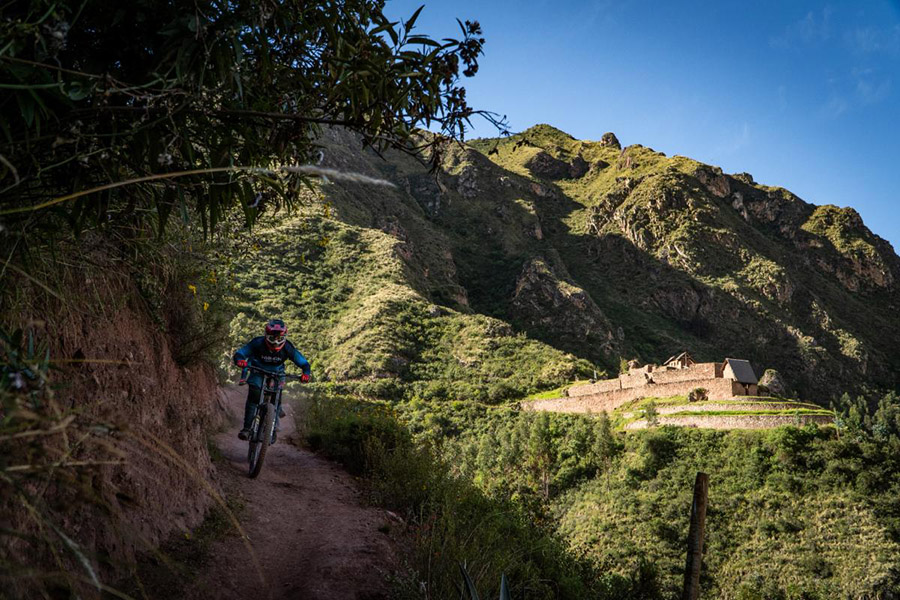
Cusco and the Sacred Valley form a natural playground for experienced bikers. Many of the routes follow or intersect trails engineered by the Incas, originally built for messengers and caravans.
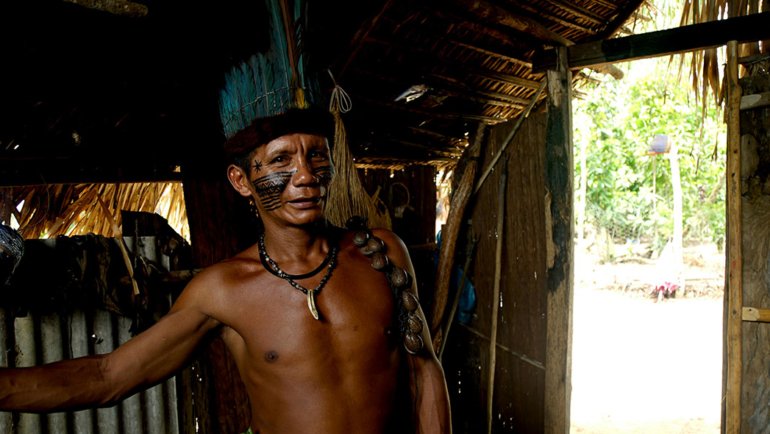
Today, they challenge riders with stone staircases, switchbacks, and technical rock gardens framed by glacier peaks and terraced hillsides. Quechua communities still farm these valleys, creating a backdrop of genuine rural life that makes every descent part of a cultural journey as much as a physical one.
The Andes as a Riding Arena
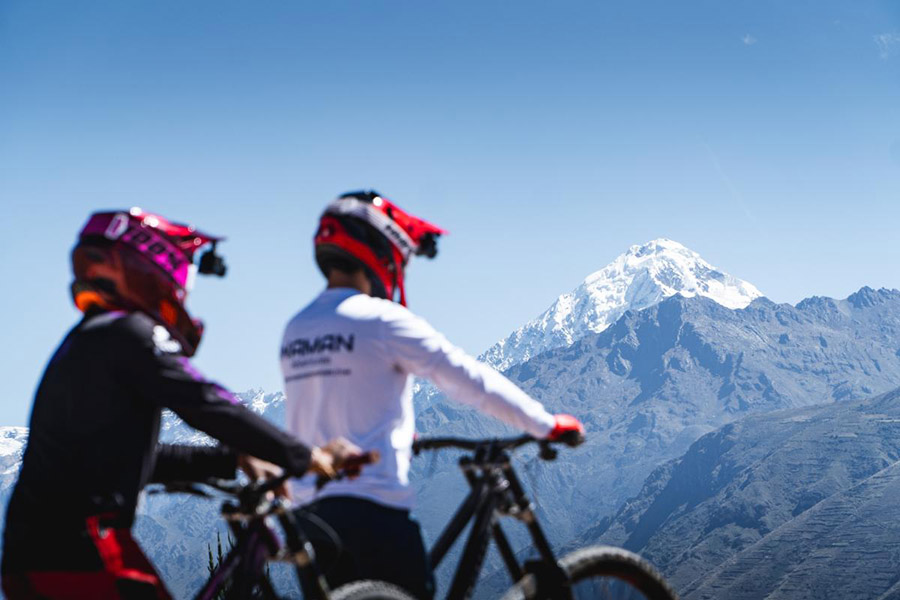
The Andes are the world’s second-highest mountain range, and Cusco’s trails reflect that immensity. Within hours, riders experience sudden shifts from high-altitude grasslands to temperate valleys and subtropical forests. Trails like Lamay, Yuncaypata, Perolniyoc, Maras Downhill, El Brujo, El Pastor, and Patacancha show this diversity clearly.
- Lamay begins above 13,000 feet and drops more than 4,000 vertical feet into the Sacred Valley. It’s a blend of technical challenge and pure flow, surrounded by snow-capped peaks.
- Yuncaypata, just minutes from Cusco, passes through eucalyptus forests and pre-Inca terraces, ideal for acclimatization or half-day rides.
- Perolniyoc combines singletrack with rural pathways and finishes at a stunning waterfall framed by ancient walls.
- Maras Downhill runs toward the famous salt terraces, where thousands of white pools reflect the mountain light.
- El Brujo ride is reserved for advanced riders, narrow and exposed trails demanding total control.
Facing the Altitude
Cusco sits at 11,152 feet (3,399 m), and some trailheads reach 14,700 feet. The thin air affects every climb, so acclimatization is not optional. Spend at least two days in Cusco before your first demanding ride. Common symptoms of altitude sickness include headaches, nausea, fatigue, and sleep disturbance.
Adaptation is straightforward: stay hydrated, rest well, and avoid intense exertion at first. Some riders use medication such as Diamox under medical advice. Once adapted, the reward is riding with clear lungs and strong focus. Most routes are predominantly downhill, with gravity and technique working together across incredible landscapes.
Equipment and Safety
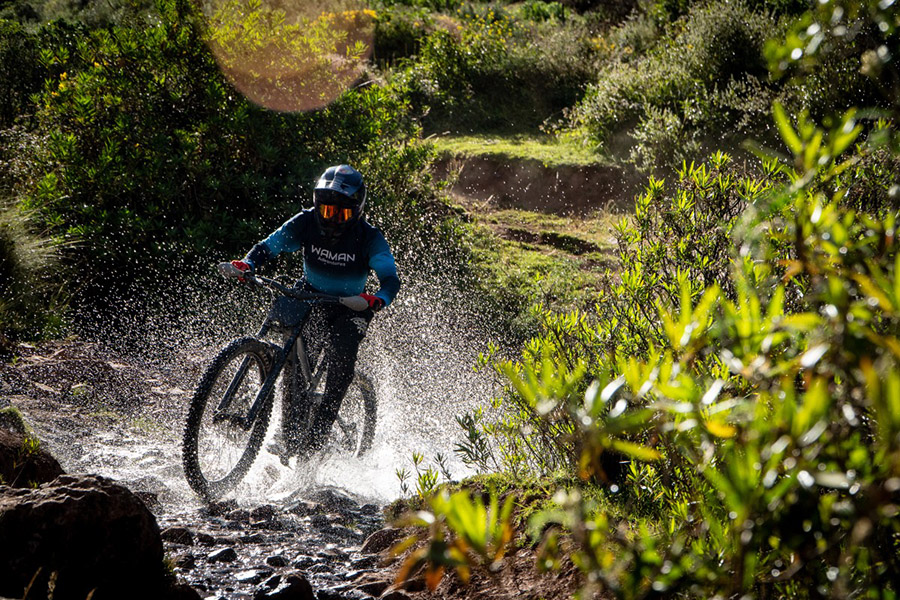
Top operators like Peru Biking Tours provide full-suspension bikes from recognized brands, regularly serviced and tuned for high-altitude terrain. Helmets, gloves, pads, and basic mechanical support are included. Tubeless tires with reinforced sidewalls are essential for rocky descents and thorny paths.
Guides are indispensable. Andean trails are rarely marked and often cross communal lands. Local guides know each section, maintain good relationships with the communities, and can assist in any emergency. Their presence guarantees both safety and cultural respect.
Preparation and Gear
Andean weather can change quickly, from 41°F (5°C) mornings to 68°F (20°C) afternoons. Riders should dress in layers, carry a waterproof jacket, and use high-SPF sunscreen and sunglasses. Two liters of water and energy snacks are the minimum.
Cusco’s elevation and sun exposure are intense even on cloudy days. A buff or neck gaiter and lip balm with SPF prevent burns. Quality gloves improve control on long descents where temperatures can shift drastically.
Travel and Logistics
Visitors receive a 90-day entry permit upon arrival, and no visa is required for most nationalities. Flights connect Lima and Cusco multiple times daily. Passports must be valid for at least six months and have two blank pages.
No vaccinations are mandatory for Cusco, though hepatitis A/B, typhoid, and yellow fever are recommended for jungle regions. Peru’s currency is the Sol (PEN), usually 3.7–4 per USD. Cash is necessary in rural areas, while cards work reliably in cities. Notify your bank before traveling.
When to Ride
The dry season (May to October) offers the most stable conditions, with firm terrain and clear skies. The wet season (November to April) brings heavier rains that make trails more technical. Advanced riders often enjoy the challenge of muddy descents, while beginners should avoid the wet months. June to August is peak season, so booking in advance ensures guides and equipment availability.
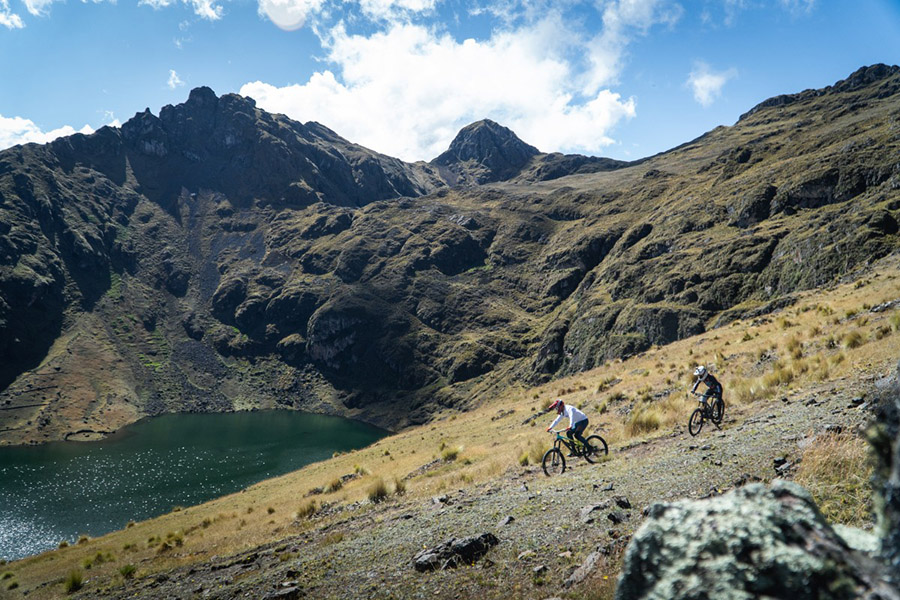
Multi-Day Adventures
Beyond day trips, multi-day expeditions connect mountain biking with cultural experiences and Machu Picchu visits. Packages of three to eight days include accommodation, meals, transportation, permits, and scenic train rides. Riders can stay in local hotels or lodges equipped with pump tracks or private workshops for tuning bikes. Families and e-bike travelers can also join customized itineraries designed for comfort and gradual elevation.
Professional-level events such as the Inca Avalanche or private camps with expert riders use these same routes, confirming the region’s world-class reputation.
The Real Experience
Riding in Peru is about the rhythm of the Andes, the sound of wind above terraced valleys, the chill of thin air, and the connection with communities that preserve ancestral ways of life. The trails themselves are living heritage, engineering marvels carved centuries ago that still serve the people of the highlands.
With more than a decade guiding riders from around the world, Peru Biking Tours understands each section of these routes, the shifting weather, and the customs that make them unique. Their philosophy blends safety, respect, and passion for authentic exploration. This is mountain biking at its purest form: real terrain, real culture, and the spirit of the Andes on two wheels.