Spain works well for people who need to get things done without putting life on pause. Reliable transport, good internet, and a strong café culture make it easy to stay productive, while the pace outside work hours stays relaxed enough to actually enjoy being there.
The country also understands hospitality in a practical way. Hotels, rentals, and serviced apartments are often designed with longer stays and working guests in mind, not just short breaks.
What sets Spain apart is how varied the experience can be without much effort. You can move from a quiet island to a busy capital, or from a historic city to a modern coastal hub, all within a few hours. For business travellers balancing calls, meetings, and deadlines with proper downtime, that flexibility matters more than novelty. Spain tends to get that balance right.
Menorca, Spain – Seaside Villas, Private Workspaces, and Relaxing Escapes
Menorca suits travellers who need calm rather than constant stimulation. The island is quieter than Mallorca and Ibiza, and that shows in the pace of daily life. Roads are short, towns are compact, and it’s easy to structure days around work without feeling rushed. Internet coverage is generally reliable, especially in and around Mahón and Ciutadella, where many long-stay properties are based.
Many Menorca villas are set up with remote work in mind, even if that’s not their main selling point. Separate rooms, shaded terraces, and solid Wi-Fi make it possible to work comfortably without feeling stuck indoors. It’s common to start early, take a long break in the afternoon, then return to emails later when the heat drops. The island rhythm allows for that kind of flexibility.
Outside work hours, downtime stays simple. Coastal walks, quiet swimming spots, and local restaurants that don’t rush you through meals make it easy to switch off properly. There’s not much pressure to do everything, which is part of the appeal. Menorca doesn’t try too hard.
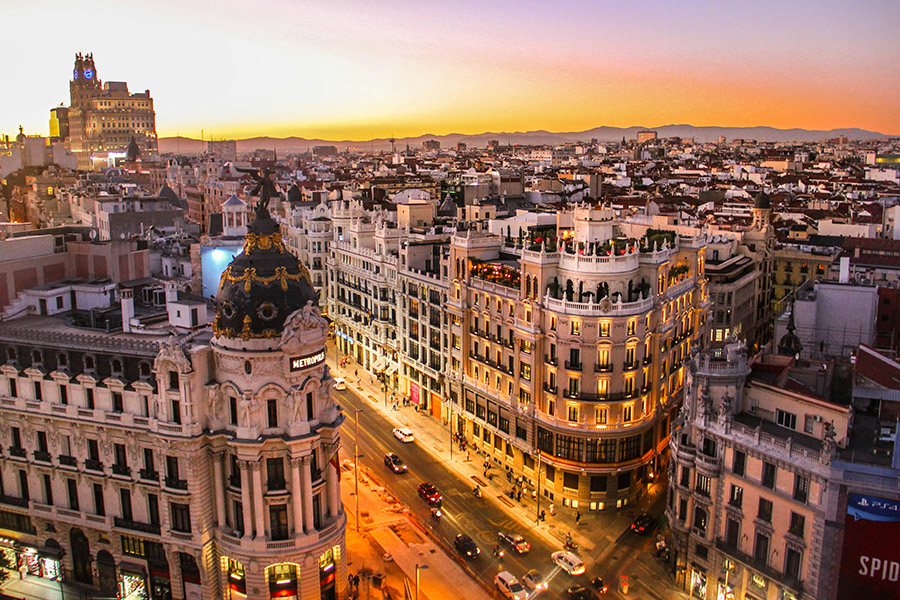
Madrid – Stylish Hotels, Rooftop Workspaces, and Vibrant City Life
Madrid is better suited to travellers who like structure and momentum during the workday. The city runs efficiently, public transport is straightforward, and many hotels cater to business travellers without feeling corporate. Central neighbourhoods like Salamanca, Chamberí, and parts of Malasaña offer easy access to meeting venues and quieter streets for focused stays.
Work-friendly hotels often include shared lounges, rooftop workspaces, or café-style lobbies where staying a few hours doesn’t feel awkward. Wi-Fi speeds are generally consistent, and finding a calm place for a video call is rarely a problem. The city also works well for short stays built around meetings, conferences, or project-based travel.
Once the laptop closes, Madrid opens up. Evening meals start later, which suits people finishing work in different time zones. Museums stay open late, neighbourhood bars are informal, and there’s no pressure to dress things up. It’s a city that respects both productivity and personal time, without forcing a balance.
Barcelona – Iconic Architecture, Conference Facilities, and Sandy Beaches
Barcelona is one of Spain’s strongest options for combining structured business travel with casual downtime. The city regularly hosts international conferences and exhibitions, and its infrastructure reflects that. Large venues, modern hotels, and efficient transport links make it practical for travellers who need to move between meetings without complications.
Many visitors base themselves near the waterfront or in the Eixample, where it’s easy to walk between work commitments. The appeal here is how quickly the day can shift. A formal meeting in the morning might be followed by a quiet lunch near the sea, then a late afternoon walk before logging back on. That mix doesn’t feel forced.
Barcelona also makes it easy to explore global business events without sacrificing comfort. The city is used to hosting international crowds, so services run smoothly even during busy periods. Outside the conference circuit, beaches and neighbourhood cafés provide space to reset. The contrast works because it’s practical, not performative.
Seville, Spain – Historic Streets, Boutique Stays, and Private Meeting Spaces
Seville has a slower tempo but offers more than enough for the work-and-play traveller. Boutique hotels frequently provide private meeting rooms or adaptable lounges that can be reserved for quiet work. Many of these spaces are tucked behind traditional façades, giving a calm environment while still being close to the main streets.
The city itself is best explored in short bursts between meetings. Walking through the historic quarters, wandering down the Guadalquivir River, stopping at a local café, or wandering past small plazas can give a brief but refreshing pause.
Evening schedules can be equally flexible, whether it’s a quick tapas dinner or a stroll by the river. For anyone who doesn’t want to feel trapped in a hotel room but still needs a reliable workspace, Seville delivers a simple but effective balance.
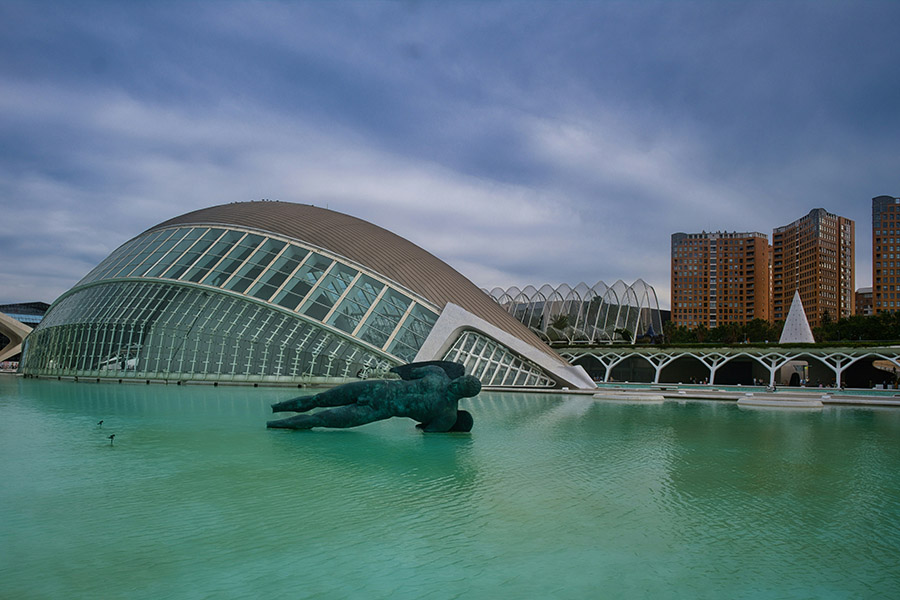
Valencia, Spain – Coastal Views, Gourmet Dining, and Work-Friendly Retreats
Valencia sits comfortably between business efficiency and coastal ease. It’s less intense than Barcelona and less formal than Madrid, which appeals to travellers staying longer than a few days. The city has invested heavily in modern infrastructure, making transport, accommodation, and connectivity straightforward.
Many newer hotels and serviced apartments cater to professionals who need space to work rather than just somewhere to sleep. Rooms are often larger, desks are practical, and public areas are designed for quiet use. The City of Arts and Sciences area, in particular, offers modern stays that feel geared towards longer visits.
Food plays a big role here, but it doesn’t dominate the schedule. Lunch breaks can be generous without derailing the day, and evenings near the beach are easy to keep low-key. Valencia works because it doesn’t demand attention. It fits around work rather than competing with it.
Summary
Can you really have a productive work trip without missing out on the surroundings? In Spain, the answer is yes. The country doesn’t force a choice between business and pleasure. Cities and coastal towns are set up to handle meetings, professional events, and focused work, while still giving you space to explore.
You can start the morning in a private Menorca villa, catching up on emails, head to a rooftop workspace in Madrid for meetings, and still squeeze in an afternoon stroll along Barcelona’s beachfront. Even cities with a slower pace, like Seville and Valencia, make it easy to mix work with leisure.
Spain provides the infrastructure that allows you to stay productive, but also the environment to step away from the desk when you need to. For anyone planning a business trip, it’s a place where you can truly get work done and still experience what the destination has to offer.