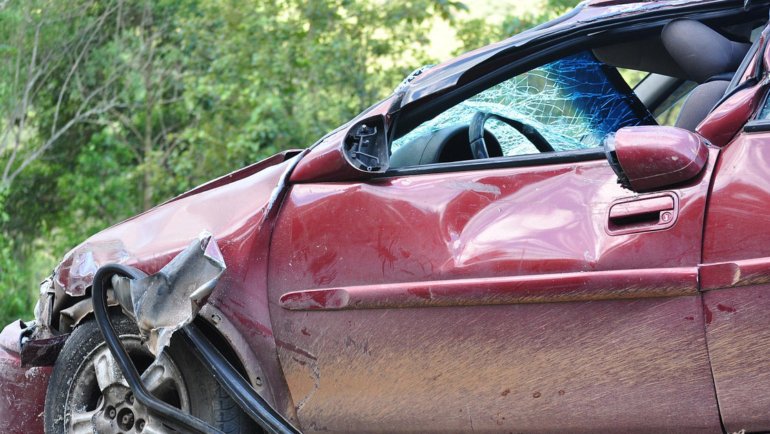
Each year, the U.S. sees over 5,000 fatal crashes, 110,000 injury crashes, and an estimated 412,000 property-damage-only (PDO) crashes involving large trucks. That’s over half a million truck-related crashes annually.
For any type of accident, determining who is at fault takes precedence. But this task is not easy. It would need thorough investigation and careful analysis before a conclusion is drawn.
But with accidents involving trucks, this task may take double the effort. This is because business trucks usually involve more than one person. There’s the driver, the trucking company, and even the maintenance provider, making it difficult to figure out who should hold the responsibility of the crash.
If the accident was caused by mechanical issues, liability may lie with several parties, according to a truck accident lawyer in Leander. They could include the manufacturers, mechanics, or even the driver or employer if they failed to maintain the vehicle.
Let’s find out how lawyers gather and present a wide range of evidence to establish negligence and responsibility.
Accident Reports and Police Statements
Accident reports and police statements are an important piece of evidence in a truck crash resulting in the establishment of liability. These documents give an official account of the incident with information about the time when the crash occurred, the location, and the conditions as they were at the scene.
The statements further comprise what the officer observed and perhaps their opinion on who might be at fault-or rather opinion as to who might be responsible, which is indeed extremely helpful for your case.
In a truck accident lawsuit, the evidence plays a central role in proving negligence and determining liability. And with the proper use of police reports, witness accounts, and other documentation, your legal position can be strengthened, giving you a better chance for fair compensation for your injuries and damages.
Having the knowledge of such facts helps one gather a stronger case and provides your lawyer the option to tackle efficiency in the claims of liability. One must get the report early; it’s so crucial that evidence is secured.
Knowing exactly what the record is and what role it plays will go a long way for you to be accepted as a recipient of the justice that you and your loved ones deserve.

Eyewitness Testimonies
Eyewitness testimonies can be powerful evidence to establish liability in truck crashes. An accident witnessed by somebody may have their account supplying major data that police reports may lack.
The eyewitness view is ideally suited to explaining exactly what the accident was when all other evidentiary approaches have left some gaps. When you start to put together the eyewitness accounts, you are, virtually speaking, nurturing a community into being out of an event.
Witnesses should be treated with honor and dignity for their experiences. Their insights are immensely valuable in saying much about their side of the truth and getting a win for both the victims and the community that supports them.
Vehicle Maintenance Records
Vehicle maintenance records can be instrumental to proving liability after a crash. These records show how well a truck has been maintained, including inspections and repairs.
Mechanical failures can occur when maintenance is neglected by a truck. In essence, negligent maintenance can be the cause of a truck accident. Upon a collision, the examination of these records may reveal negligence and hold the responsible party liable.
They are not papering exercises; on the contrary, these papers provide evidence of ensuring safety for the road. With the help of the maintenance records, one can fight for a just outcome so that every driver is safe in our society.

Electronic Data From Trucks
Consider that any such data can be offered in evidence on a question of liability after an accident. In reality, these vehicles are standardly installed with modern technology that ever captures essential information-whether it is speed, braking, or even GPS locations.
That made it so detailed when describing what happened during that incident. The wrong interpretation of such evidence can ascertain whether the driver acted recklessly or whether mechanical failure stood in the way.
These data can prove to be more reliable and can even bolster eyewitness accounts. This fosters a connection among those affected as they seek justice and retribution for the harm caused by truck accidents.
Photographic Evidence and Scene Reconstruction
Getting to the facts out of a truck crash has, at times, become very difficult without photographic evidence and crime-scene reconstruction. Near the accident, photographs of details such as vehicle positions, road conditions, and damage are crucial for accurately depicting the event and significantly supporting one’s case.
The reconstruction then proceeds further toward creating a crash with experiential knowledge; at that stage, speed, angles, or another parameter that may actually produce some insight will come into play.
So, together with photographic evidence, reconstruction can establish a detailed storyline that further strengthens one’s argument. This process entails linking the details of the incident. They contribute to the creation of an image that is comprehensible to all.
Understanding what evidence is used in these cases is essential for building a strong claim. In the end, you can secure fair compensation and hold the right parties accountable for the damages caused.