

The Central African Republic is a landlocked country often described by conservationists as one of Africa’s last great wilderness frontiers. Its parks and reserves, especially in the east and southeast, shelter some of the continent’s most intact savanna and forest ecosystems. At the heart of this wild beauty stands the country’s national animal: the African elephant.
But here’s a detail many people don’t realise. The elephants of CAR aren’t just the giants you see in wildlife documentaries. They include some of the most elusive forest elephants on Earth, known for their straight tusks, remarkable intelligence and a behaviour so secretive that researchers still struggle to track their movements. In the Dzanga Bai clearing, for instance, elephants gather in numbers seen almost nowhere else — a natural spectacle that feels almost mythical.
In this article, we’ll explore the African elephant as the national animal of the Central African Republic, where it lives, what it symbolizes, and what it means for a country whose identity is deeply intertwined with its wildlife.
Quick Information About the African Elephant
| Scientific name | Loxodonta africana (savanna elephant), Loxodonta cyclotis (forest elephant) — both occur in CAR |
| Average size | Savanna elephants: 2.5–4 m tall (8.2–13.1 ft) at the shoulder; forest elephants: 2–3 m (6.5–9.8 ft) |
| Average weight | Savanna elephants: 4,000–7,000 kg (8,800–15,400 lb); forest elephants: 2,000–4,000 kg (4,400–8,800 lb) |
| Average lifespan | 50–70 years in the wild |
| Geographical range | Widespread across sub-Saharan Africa; CAR is home to both forest and savanna populations, especially in Dzanga-Ndoki NP and Bamingui-Bangoran NP |
| Habitat | Dense rainforests, forest clearings, savannas and woodland mosaics |
| Conservation status | Savanna elephant: Endangered; forest elephant: Critically Endangered (IUCN) |
Meet the African Elephant, National Animal of the Central African Republic
When you picture the African elephant, you might imagine a towering giant crossing open savannas. In the Central African Republic, you’ll find that version — the savanna elephant — but also its more mysterious cousin, the forest elephant. Together, they represent two different faces of the same iconic animal.
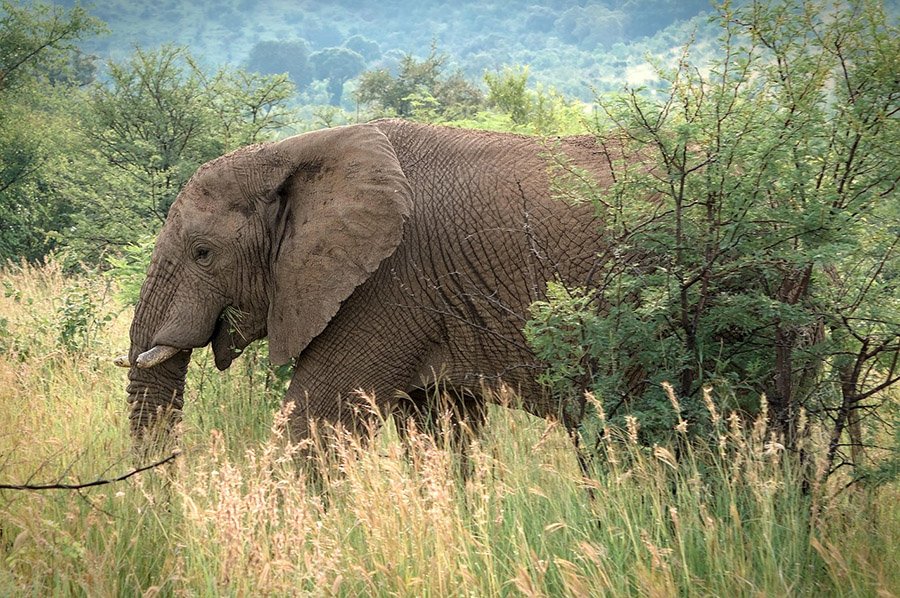
Savanna elephants are the largest land mammals on Earth, with broad ears shaped like the African continent and curved tusks that sweep outward. Forest elephants are stockier and slightly smaller, with straighter, downward-pointing tusks designed for navigating dense jungles. Their ears are rounder, and their overall appearance feels compact, almost carved to fit the rainforest itself. These distinctions are subtle in the field, but locals, researchers and guides in CAR know them well.
Sexual dimorphism is strong. Bulls are significantly larger than females and have thicker tusks, while females lead the social structure — matriarchal herds built from mothers, daughters, aunties and calves. Bulls wander independently, sometimes joining herds temporarily during mating periods.
In the ecosystem, elephants are what ecologists call keystone engineers. They shape the environment as much as it shapes them. Savanna elephants push over trees to create grasslands, carve pathways through dense thickets and dig waterholes during dry seasons. Forest elephants disperse seeds from countless tree species and open up trails through the rainforest that other animals later use. Their diet ranges widely: grasses, roots, leaves, bark and fruits.
As adults, elephants have almost no natural predators. Only calves are vulnerable to big cats or hyenas, and even then, only under unusual circumstances. Their greatest threat is not another animal but humans — a topic we’ll return to later.
Where Does the African Elephant Live?
In the Central African Republic, elephants inhabit some of the most ecologically rich and remote regions of the continent. Two landscapes dominate their distribution: the rainforests of the southwest and the savanna-woodlands of the north and east.
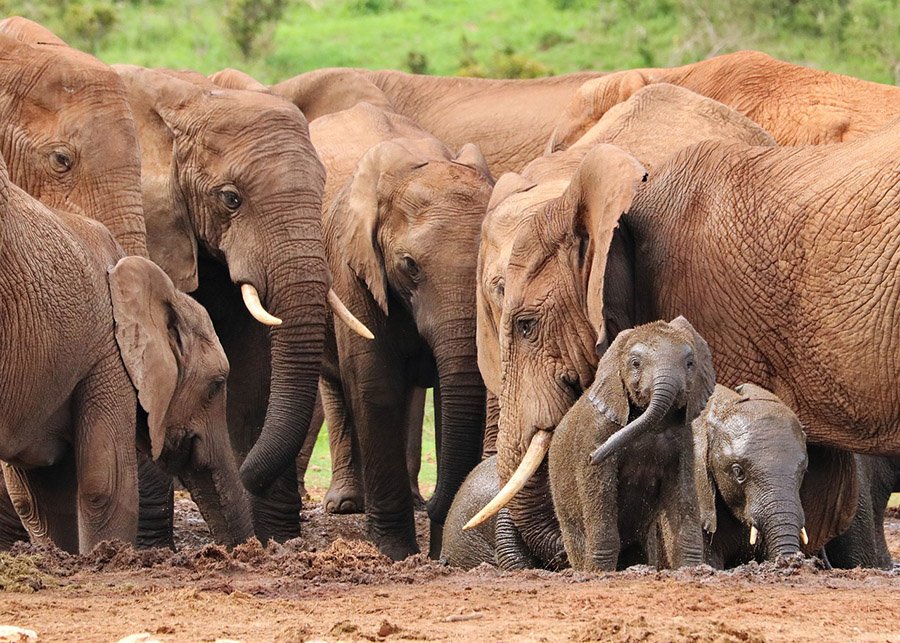
The forest elephants of CAR thrive in areas like Dzanga-Ndoki National Park, where dense tropical rainforest meets open “bais” — natural forest clearings filled with mineral-rich soil. Dzanga Bai, often called the “village of elephants,” is world-famous for the daily gatherings of dozens of elephants that come to drink, dig and socialise. The climate here is equatorial: hot, humid and rainy for much of the year, an ideal environment for the fruit-heavy diet of forest elephants.
Further north, in places such as Bamingui-Bangoran National Park and Manovo-Gounda St. Floris National Park, the savanna elephants roam through open grasslands, gallery forests and wooded savannas. The climate is more seasonal, with a pronounced dry season that pushes elephants to travel long distances in search of water and fresh vegetation.
Across Africa, elephants historically ranged from the Sahel to the Cape, but habitat loss and poaching have shrunk their distribution. CAR remains one of the rare countries where both types still coexist, using landscapes that are among the least disturbed in Central Africa.
Why and When Did the African Elephant Become the National Animal of the Central African Republic?
The Central African Republic does not have a long formal list of national symbols, and the African elephant’s designation as the national animal is understood to be symbolic rather than codified in law. Yet among Central Africans, the elephant’s association with the nation is unmistakably clear. Its selection reflects a blend of cultural heritage, ecological identity and historical importance across the region.
Elephants have been part of Central African culture for centuries. In many communities, they are seen as symbols of wisdom, longevity and strength — traits admired in leaders and elders. Traditional stories often describe elephants as “the quiet chiefs of the forest,” respected for their intelligence and their ability to remember migration routes, waterholes and forest paths across generations. Hunters and forest peoples such as the BaAka and Sangha communities have long regarded the elephant with a mixture of respect, reverence and responsibility.
Historically, elephants played a major role in Central Africa’s economy through ivory trade routes that ran from the Congo Basin into North Africa and Europe. While this trade brought immense ecological harm, it also shaped part of the region’s early interactions with the outside world. In the modern era, conservationists and local communities have reframed the elephant as a symbol of natural heritage, a flagship species representing the country’s extraordinary biodiversity. The choice of the elephant as a national emblem reflects this shift from exploitation to protection.
There are, however, tensions associated with this symbolism. Elephant conservation in CAR intersects with issues such as poaching, transboundary wildlife trafficking and human–elephant conflict. Some communities living near parks face crop losses when elephants wander close to villages. Balancing these concerns with national pride and conservation commitments is an ongoing challenge. Yet despite these complexities, the elephant remains deeply rooted in the country’s identity — a creature that embodies both the beauty and the fragility of the Central African landscape.
Where Is the African Elephant Featured in the Central African Republic?
While the elephant does not appear on the national flag or coat of arms, it is strongly represented in conservation branding, tourism materials and educational programmes throughout the country. National parks such as Dzanga-Ndoki, Manovo-Gounda St. Floris and Bamingui-Bangoran frequently use elephant imagery in their signage, brochures and community outreach efforts. For many visitors, the elephant is the face of CAR’s wilderness experience.
The most famous symbolic representation of elephants in CAR is the Dzanga Bai elephants, which are featured in international documentaries, ecotourism campaigns and research publications. Photographs of dozens of elephants standing side by side in the clearing have become iconic, acting almost as an unofficial national image. When CAR is promoted abroad as a conservation destination, elephants are almost always at the centre of the narrative.
In everyday culture, elephants appear in artwork, handicrafts and carvings — especially those created by artisans from forest-dwelling communities. These carvings often depict elephants alongside gorillas or antelopes, reflecting the species-rich environment of the Congo Basin. In Bangui’s markets, elephant motifs are common on masks, sculptures and woven goods, worn or displayed as symbols of strength and continuity.
Although the elephant may not be embedded in formal state emblems, its presence in the cultural and ecological identity of the Central African Republic is undeniable, shaping how the world perceives the country and how the country perceives itself.
Names of the African Elephant
The African elephant is known by several names across the Central African Republic, reflecting the country’s linguistic and cultural diversity. In French, the official language, it is simply called “éléphant d’Afrique.” In Sango, the national lingua franca, it is known as “mbɔkɔ”, a word that also appears in local proverbs referring to wisdom, patience and grounded strength.
Different ethnic groups also use their own traditional names. Among the BaAka and other forest communities, forest elephants are sometimes referred to in terms that translate roughly to “the quiet walker” or “the deep forest one,” highlighting their elusive nature. Some northern groups use names that distinguish between the large plains elephant and the shadow elephant (forest elephant), recognising their contrasting landscapes and behaviours.
Scientifically, the species belongs to the genus Loxodonta. Historically, forest elephants were sometimes treated as a subspecies (Loxodonta africana cyclotis), though they are now widely recognised as a separate species, Loxodonta cyclotis. The savanna elephant remains Loxodonta africana. Both are present in CAR, making the country one of the few places where two elephant species overlap naturally.
Is the African Elephant Endangered?
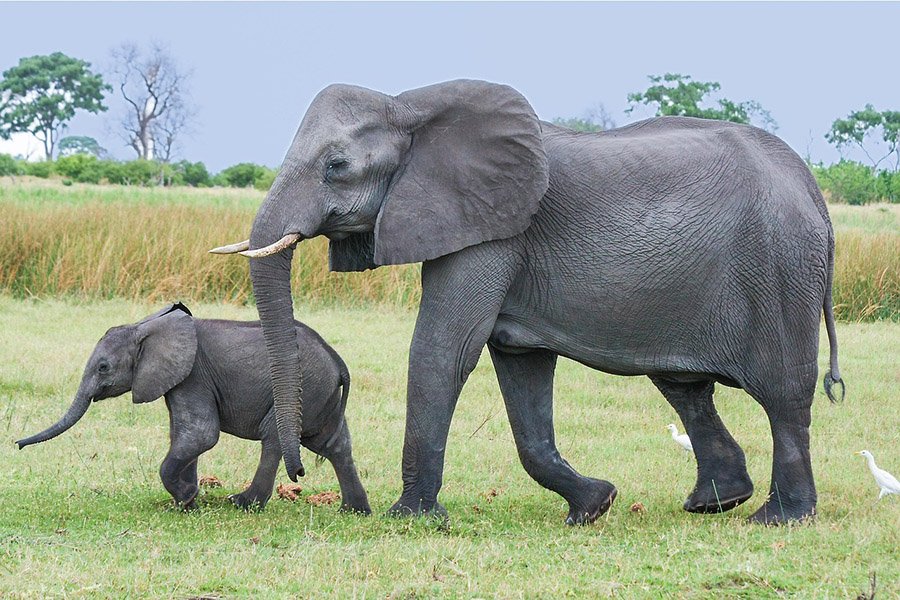
Unfortunately, yes — both elephant species found in the Central African Republic are facing serious threats. The savanna elephant is listed as Endangered, while the forest elephant is classified as Critically Endangered by the IUCN. Forest elephants, in particular, have suffered drastic declines over the past few decades due to poaching and habitat loss.
Poaching for ivory remains the most significant threat, especially in remote or conflict-affected areas where law enforcement is difficult. In CAR, elephants have historically been targeted by organised poaching groups that operate across borders, making conservation a regional challenge rather than a purely national one. Additionally, deforestation and mining activities degrade elephant habitat, fragmenting the forests they depend on for food and migration routes.
Despite these challenges, CAR is home to several remarkable conservation initiatives. The Dzanga-Ndoki National Park, part of the Sangha Trinational UNESCO World Heritage Site, is one of the continent’s strongest examples of collaborative conservation. Rangers, researchers and local communities work together to monitor elephants — particularly those at Dzanga Bai — using non-invasive tracking, acoustic monitoring and long-term behavioural studies. Community outreach programmes have also helped reduce poaching pressure by providing alternative livelihoods and strengthening relationships between wildlife authorities and local residents.
In short: while the situation is concerning, CAR remains one of the most important strongholds for African elephants, and local conservationists continue to make notable progress under challenging conditions.
Interesting Facts
- Dzanga Bai is one of the only places in the world where you can see more than 50 elephants gathered naturally in one forest clearing. The mineral-rich soil draws them in daily, creating a spectacle that feels almost ceremonial.
- Forest elephants have straighter tusks than savanna elephants, an adaptation that helps them manoeuvre between dense tree trunks and dig for minerals in forest clearings.
- Elephants shape the rainforest. Many large tree species rely on elephants to disperse their seeds. Some seeds even germinate better after passing through an elephant’s digestive system.
- They communicate through infrasound, producing low-frequency rumbles that travel several kilometres — especially useful in dense rainforest where visibility is limited.
- In traditional stories among forest communities, elephants are often described as “the memory of the forest,” able to recall ancient paths, hidden waterholes and places of safety. These tales reflect real scientific findings about elephant cognition and long-term memory.
These facts show why elephants are not just animals in CAR — they are living symbols of the country’s ecological and cultural soul.

Other Beautiful Animals Native to the Central African Republic
- Western lowland gorilla – Found in the dense forests of the southwest, especially in Dzanga-Sangha. Known for their shy behaviour and striking silverbacks.
- Bongo antelope – A reddish-brown, white-striped forest antelope that thrives in the country’s rainforests; one of Africa’s most visually striking mammals.
- Giant forest hog – The world’s largest wild pig, a powerful and elusive species found in humid forests.
- African grey parrot – Highly intelligent and famous for vocal mimicry; CAR’s forests host strong populations.
- Red river hog – A vibrantly coloured wild pig with a bright orange coat and characteristic white facial markings.
Frequently Asked Questions
Are African elephants native to the Central African Republic?
Yes. CAR is one of the few countries where both savanna elephants (Loxodonta africana) and forest elephants (Loxodonta cyclotis) coexist naturally.
Where is the best place to see elephants in CAR?
The most famous location is Dzanga Bai in Dzanga-Ndoki National Park, where forest elephants gather in large numbers almost every day.
Why are forest elephants considered more endangered than savanna elephants?
Forest elephants have suffered steep population declines due to poaching and habitat loss. They also reproduce more slowly, making recovery more difficult.
Do elephants have cultural significance in the Central African Republic?
Yes. Elephants are widely respected as symbols of strength, memory and resilience. Many traditional stories portray them as wise guardians of the forest.
Is the elephant officially recognised as the national animal of the Central African Republic?
It is considered the national animal in symbolic and cultural terms, though not formally defined in legal documents.
What other national symbols does CAR have?
The national flag, the coat of arms, the national anthem “La Renaissance,” and national colors (blue, white, green, yellow and red) are officially recognized symbols.
Can visitors safely see wildlife in CAR?
Yes, in designated protected areas such as Dzanga-Sangha, where guided tourism is established and managed by conservation organisations.


