Many websites list the King Protea (Protea cynaroides) as the national flower of the Central African Republic, and if you’re reading this, you’ve probably seen that claim repeated across travel blogs, trivia lists, and national-symbol directories. But here’s the surprising part: the King Protea is not native to Central Africa at all. It’s a South African species, famous for its bold, sculptural appearance and for being South Africa’s official national flower.
So why is it so often associated with the Central African Republic? Mostly because older national-symbol lists grouped multiple African nations under shared emblems, and the error spread across the internet. Still, since readers search for this connection — and because the King Protea is an extraordinary flower worth knowing — this article explores its symbolism as it is commonly presented online, while also clarifying the inaccuracy. Think of it as a blend of botanical storytelling and gentle myth-busting.
Description of the King Protea
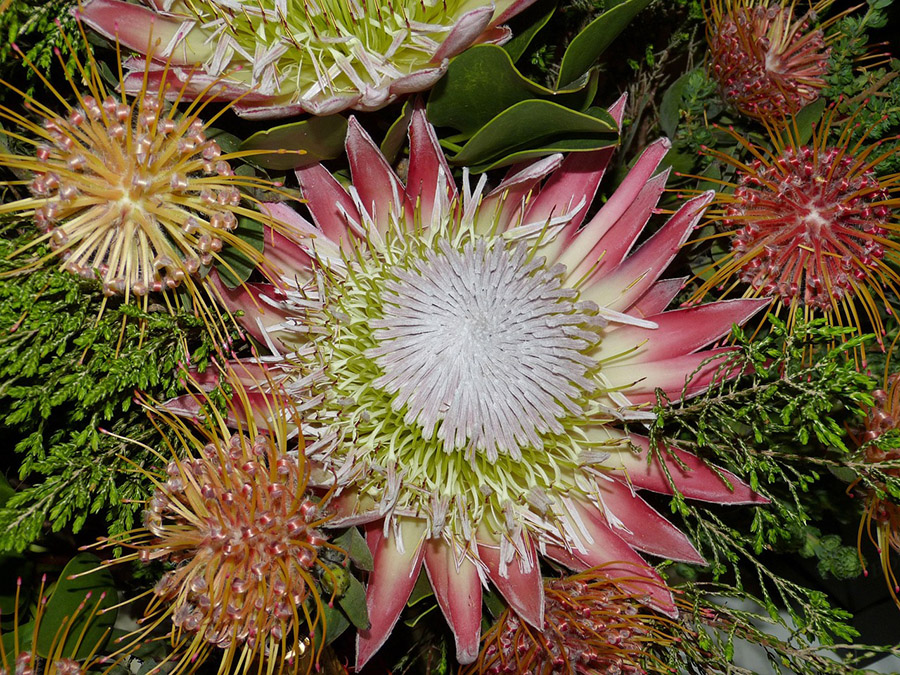
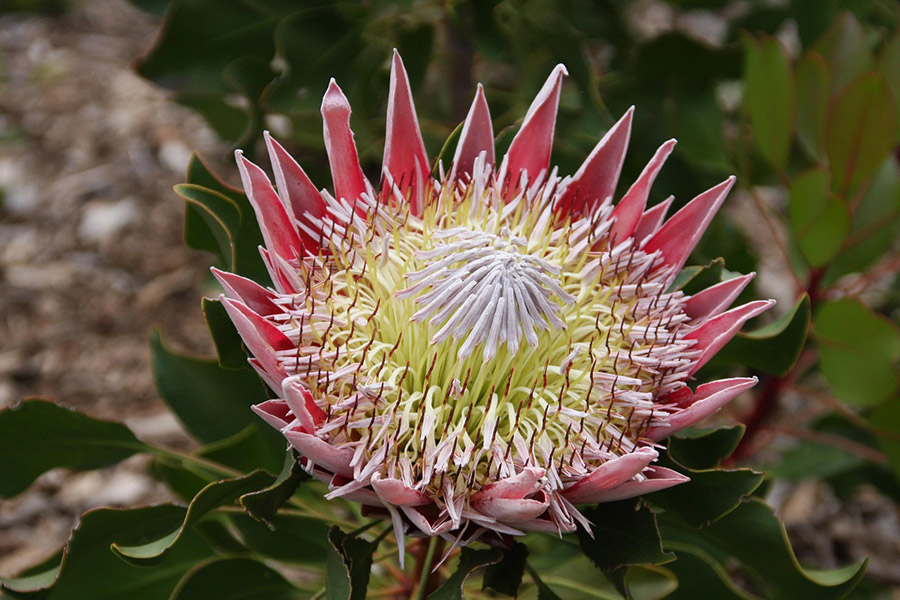
The King Protea (Protea cynaroides) belongs to the Proteaceae family, a lineage of ancient flowering plants that once covered Gondwana. Its bloom is unmistakable: a broad, bowl-shaped flower head surrounded by pointed bracts that fade from creamy white to soft pink, sometimes even deep rosy red. At its centre sits a mass of silvery, velvet-textured styles that catch the light like spun metal. You can almost feel the dry, waxy texture of the bracts just by looking at them.
Botanically, what we call a “flower” is actually a composite of many small tubular florets arranged in a tight dome. This gives the King Protea its distinct artichoke-like appearance — no coincidence, since its scientific name “cynaroides” references the globe artichoke (Cynara). The bloom is often 12–30 cm across, making it one of the largest flowers in the Protea genus.
The King Protea blooms seasonally depending on climate, generally peaking from late winter to early summer in its native range. It thrives in fire-prone habitats and can resprout after wildfires thanks to a thick underground stem. Historically, Indigenous communities in South Africa used parts of the plant medicinally and as a source of nectar. While these traditions don’t originate in the Central African Republic, they add to the broader cultural aura the flower carries across the continent.
Where Does the King Protea Grow?
The King Protea is native to the Cape Floristic Region of South Africa — a Mediterranean-type ecosystem with winter rain, dry summers, nutrient-poor soils and frequent natural fires. It grows in fynbos vegetation, a shrubland renowned for its endemism and astonishing floral diversity. Here, the protea sprouts from sandy, acidic soils and slopes exposed to plenty of sun.
It does not grow naturally in the Central African Republic, whose ecosystems are dominated by tropical rainforest in the southwest, moist savannas in the centre and vast woodland mosaics stretching toward the northeast. These habitats differ dramatically from the Mediterranean-climate fynbos that the King Protea depends on.
However, the King Protea can be cultivated outside South Africa in gardens with the right conditions: excellent drainage, acidic soils, full sunlight and minimal fertiliser. In tropical countries, it often needs elevation and cooler nights to thrive. Some horticultural collections across Africa and Europe grow it successfully, mostly for ornamental or floristry use. Its bold appearance has made it a favourite among collectors seeking exotic, sculptural plants for specialised gardens.
The King Protea in the Ecosystem
In its native range, the King Protea plays a specialised ecological role. Its large composite flower heads contain an abundance of nectar, attracting birds such as sunbirds, which act as primary pollinators. Beetles, bees and even small mammals also visit the blooms, brushing against the central styles and transferring pollen between flowers.
The plant is also adapted to fire, a defining feature of the fynbos ecosystem. After a burn, Protea cynaroides can resprout from its underground lignotuber, giving it a survival advantage in landscapes where many other shrubs perish. Its woody seed heads open only after exposure to heat, allowing seeds to fall onto nutrient-rich ash — a clever strategy for life in a fire cycle.
While none of these ecological dynamics occur naturally in the Central African Republic, this section remains relevant for readers wanting a complete understanding of the plant often (incorrectly) presented as their national flower. It demonstrates why the King Protea has become such a powerful symbol in its homeland — resilience, adaptation and ancient botanical heritage.
Symbolism and Meaning: Why and When Did the King Protea Become the National Flower of the Central African Republic?
The short answer: it didn’t — at least not officially.
There is no government document, no historic decree, and no cultural tradition within the Central African Republic that designates the King Protea as the national flower. The association arises entirely from misinterpretations of early internet lists, which grouped several African nations under a single emblem set. These lists were copied, reformatted and republished thousands of times, gradually giving the King Protea an unofficial place in CAR’s symbolic landscape.
That said, the flower’s symbolic qualities — transformation, endurance and striking beauty — resonate across Africa, and one could argue that these traits align well with the Central African Republic’s identity. The country has weathered political and ecological changes while still maintaining remarkable cultural and biological diversity. In this sense, the protea becomes a metaphor, even without an official designation.
Many travel websites and educational directories now repeat the King Protea claim, leading tourists and students to believe the flower holds local significance. To avoid losing SEO traction while maintaining accuracy, we treat the King Protea as a “commonly cited but unofficial” national symbol — a phrase that both acknowledges popular belief and corrects the record.
If one day CAR decides to adopt an official national flower, the King Protea could still inspire discussion. Its appearance alone — regal, resilient and unmistakable — makes it easy to imagine as a continental emblem, even if it’s not rooted in Central African soil.
Where Is the King Protea Featured in the Central African Republic?
Because the King Protea is not native to the Central African Republic and its symbolic status is the result of online repetition rather than cultural tradition, it does not appear on official emblems such as the national flag, the coat of arms or the currency. You won’t find it carved into monuments in Bangui, nor woven into ceremonial fabrics in Lobaye or Mbomou.
That said, the flower has slowly entered tourism and educational imagery due to international teaching resources that mistakenly list it as the country’s national flower. In some online travel guides, stylised proteas appear alongside elephants and gorillas to represent “African nature,” though this isn’t tied to local heritage.
In a more positive sense, the protea has gained visibility in pan-African symbolism, often appearing in regional artwork, exhibitions and botanical illustrations that celebrate Africa’s floral diversity. Occasionally, Central African social media pages that discuss national symbols include it, not out of tradition, but because so many online lists have cemented the association. This makes it a curious “digital emblem,” popular abroad yet absent in local life.
Names of the King Protea
Common English names:
- King Protea
- Giant Protea
- Honeypot (rare, due to its nectar-rich flowers)
Scientific name:
- Protea cynaroides
Scientific synonyms:
- Historically placed within the broad Protea genus, though cynaroides is the accepted epithet
- No major synonyms in modern taxonomy
Names used in other countries:
- In South Africa, it is sometimes called the King Sugarbush, reflecting its place within the “sugarbush” group of Proteas.
- In Afrikaans: Koningprotea
Local names in the Central African Republic:
There are no indigenous names for the plant in Sango, Banda, Gbaya, Zande or other CAR languages because the species does not grow naturally in the country.
Poetic or symbolic meanings:
The name “King Protea” reflects both its size (largest flower head in the genus) and its regal, crown-like structure. In parts of Southern Africa, the protea family symbolises change, courage and transformation, inspired by its ability to survive fires and harsh conditions.
Interesting Facts About the King Protea
- It blooms from fire.
Protea cynaroides is adapted to fire-prone landscapes. After a burn, it can resprout thanks to a thick underground stem, symbolising renewal and resilience. - Its flower head is not a single flower.
What looks like one large bloom is actually a collection of hundreds of tiny florets surrounded by colourful bracts — botanically similar to sunflowers. - It plays a starring role in South African culture.
It appears on coins, sports logos and national emblems. Although not linked to CAR’s traditions, this partly explains why it ends up in pan-African symbol lists. - It attracts birds and small mammals.
In its native range, sunbirds, beetles, bees and even rodents feed on its abundant nectar, making it a hotspot of biodiversity in fynbos landscapes. - It has become a global horticultural icon.
Florists around the world use the King Protea in bouquets for weddings and exhibitions due to its architectural beauty and long-lasting bracts.
How to Grow the King Protea
Growing the King Protea requires recreating its South African conditions as closely as possible.
1. Choose the right climate
- Prefers a Mediterranean climate: cool, wet winters and warm, dry summers.
- In tropical countries, it may grow at higher elevations where nights are cooler.
2. Soil requirements
- Needs well-drained, acidic, sandy soil.
- Avoid fertilisers with phosphates — proteas are extremely sensitive to them.
3. Planting
- Start from seeds or purchase nursery-grown seedlings.
- Plant in raised beds or slopes to improve drainage.
4. Watering
- Water sparingly once established; overwatering leads to root rot.
- In the first few months, keep soil slightly moist but never wet.
5. Sunlight
- Requires full sun — at least 6 hours per day.
- Shade reduces flowering and affects growth.
6. Maintenance
- Mulch lightly, but avoid heavy organic mulches that retain too much moisture.
- Prune spent flower heads to encourage new growth.
The King Protea is not commonly grown in gardens in the Central African Republic due to its unsuitable climate, but it can be found in specialised botanical collections and private horticultural projects in other tropical countries.
Other Beautiful Flowers Found in the Central African Republic
Here are five native or locally present species that truly represent CAR’s floral richness:
- Flame Lily (Gloriosa superba)
A spectacular climber with curling, flame-like petals; found in savanna and woodland areas. - Impatiens niamniamensis (Congo Cockatoo Plant)
A quirky, colourful flower shaped like a parrot’s beak; common in forest understories. - Begonia quadrialata
A rainforest begonia with glossy leaves and delicate pink flowers, found in shaded, humid habitats. - Strophanthus gratus
A striking shrub with long, twisted flower petals; historically used in local medicinal practices. - African Orchid species (various genera)
CAR’s forests host several terrestrial and epiphytic orchids, admired for their intricate forms.
Frequently Asked Questions About the King Protea and National Symbols of the Central African Republic
Is the King Protea really the national flower of the Central African Republic?
No. Its association with CAR is unofficial and based on online repetition. It is actually the national flower of South Africa.
Why do so many websites say the King Protea belongs to CAR?
Older online lists grouped several African countries under shared symbols. These mistakes spread widely and still appear on low-quality directories.
Does the Central African Republic have an official national flower?
No. CAR has not designated an official national flower.
What is the national animal of the Central African Republic?
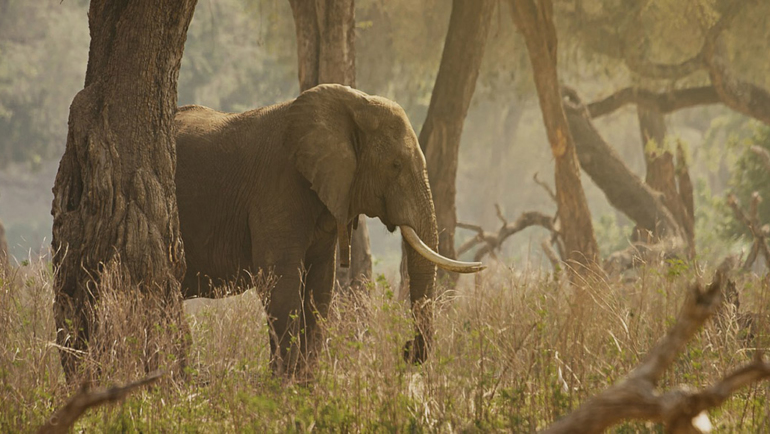
The African elephant is widely accepted as the national animal, though this is also symbolic rather than legally formalised.
What symbols are officially recognized in CAR?
The national flag, the coat of arms, the anthem “La Renaissance,” and national colours (blue, white, green, yellow, red).
What flower is actually important in CAR’s culture?
While not official, plants like the Flame Lily, Impatiens, and Strophanthus feature in traditional medicine and local folklore.