When it comes to concealed carry, finding the perfect balance between comfort and accessibility can make or break your daily carry experience.
Inside-the-waistband (IWB) holsters have become the gold standard for concealed carry enthusiasts, offering superior concealment while maintaining quick access to your firearm. For those carrying a classic 1911 Commander, selecting the right IWB setup requires careful consideration of design, material, and personal carry preferences.
The 1911 Commander’s unique characteristics—its single-stack profile, 4.25-inch barrel, and substantial weight—present both advantages and challenges for concealed carry. Understanding how to maximize comfort and accessibility with your holster choice will transform your concealed carry experience from a daily burden into a seamless part of your routine.
Understanding IWB Holster Fundamentals
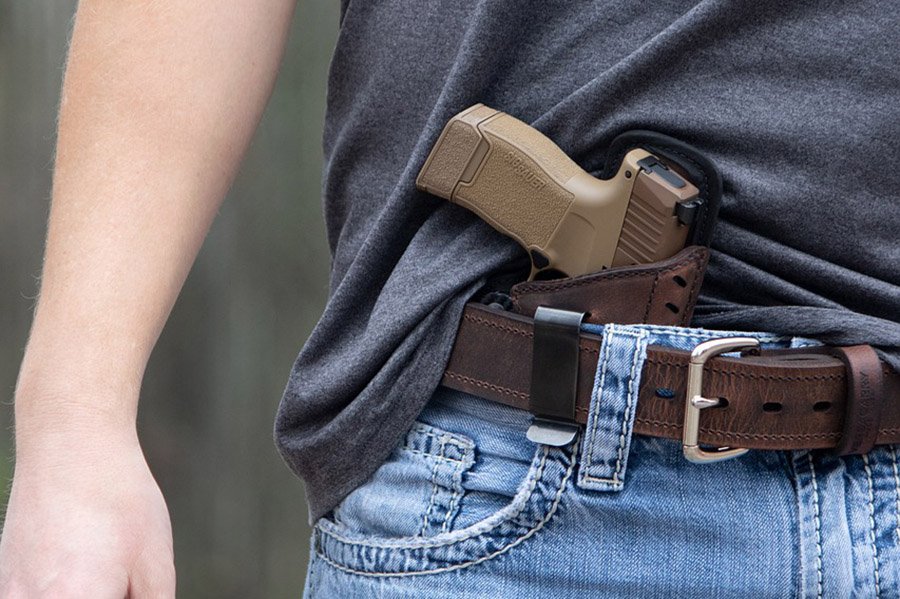
Inside-the-waistband holsters position your firearm between your body and clothing, creating a natural concealment profile that works with your body’s contours. Unlike outside-the-waistband (OWB) holsters, IWB designs tuck the majority of your firearm inside your waistline, leaving only the grip accessible above your belt line.
The physics of IWB carry work in your favor when done correctly. Your body naturally creates curves and angles that help break up the outline of your firearm, making printing less likely. The key lies in selecting a holster that works with your body type and carry position rather than against it.
Modern IWB holsters incorporate several design elements that enhance both comfort and functionality. Adjustable cant allows you to modify the angle of your firearm, optimizing both comfort and draw stroke. Adjustable retention ensures your firearm stays secure while allowing for a smooth, consistent draw. Quality materials like Kydex or leather provide durability while molding to your specific firearm model.

Why the 1911 Commander Excels in IWB Configuration
The 1911 Commander strikes an ideal balance for concealed carry applications. At 7.75 inches overall length, it’s more compact than a full-size Government model while maintaining the reliability and accuracy that made the 1911 platform legendary. This reduced length translates directly into improved concealability and comfort when carried IWB.
The single-stack magazine design creates a slim profile that disappears easily against your body. At roughly 1.25 inches wide, the 1911 Commander won’t create the bulk issues associated with double-stack firearms. This slim profile proves particularly beneficial for smaller-framed individuals who struggle with wider firearms.
Weight distribution becomes crucial with any steel-framed firearm, and a quality 1911 commander holster addresses this challenge through strategic design. The best holsters for this platform distribute the firearm’s weight across a larger surface area, preventing hot spots and pressure points that cause discomfort during extended carry periods.
Material Selection for Maximum Comfort
Holster material directly impacts your daily carry comfort and long-term satisfaction. Each material offers distinct advantages that cater to different preferences and use cases.
Kydex holsters provide unmatched durability and consistency. They maintain their shape regardless of environmental conditions and offer precise retention that remains constant over time. The hard surface allows for smooth one-handed re-holstering, and the material won’t absorb moisture or odors. Many carriers appreciate the audible click when holstering, providing positive feedback that the firearm is properly seated.
Leather holsters offer traditional appeal with modern functionality. High-quality leather molds to your body over time, creating a custom fit that improves with use. Full-grain leather provides excellent durability while remaining comfortable against your skin. The natural material breathes better than synthetic options, reducing moisture buildup during extended wear.
Hybrid designs combine the best aspects of both materials. Typically featuring a Kydex shell for the firearm with a leather backing against your body, these holsters offer rigid retention with soft comfort. The leather backing often includes moisture barriers and comfort features while the Kydex provides consistent performance.
Optimizing Carry Position and Cant
Carry position significantly impacts both comfort and accessibility. The appendix position (12-1 o’clock) offers excellent concealment and quick access but requires proper holster selection to prevent discomfort when sitting. The strong-side hip position (3-4 o’clock) provides comfortable all-day carry with natural draw mechanics.
Cant adjustment allows you to fine-tune your 1911 commander holster for optimal performance. Forward cant (FBI cant) angles the grip forward, improving concealment while maintaining natural draw stroke mechanics. Neutral cant positions the firearm straight up and down, which some carriers find more comfortable for extended sitting periods.
The relationship between ride height and concealment cannot be overlooked. Higher ride height improves concealment by tucking more of the firearm below your belt line, but it may slow your draw stroke. Lower ride height provides faster access but may compromise concealment, particularly with longer firearms like the 1911 Commander.
Essential Comfort Features
Modern IWB holsters incorporate numerous comfort-enhancing features that transform the carry experience. Body shields or sweat guards protect both you and your firearm from moisture while preventing the firearm’s sharp edges from contacting your skin. These shields should extend the full length of the slide to provide complete protection.
Rounded edges and smooth surfaces eliminate pressure points that cause discomfort during movement. Quality holsters avoid sharp corners or abrupt transitions that can dig into your body during normal activities. The investment in a well-designed 1911 commander holster pays dividends in daily comfort.
Weight distribution systems spread the firearm’s mass across a larger area of your belt and body. This might include wider holster bodies, additional mounting points, or integrated belt attachments that prevent the holster from shifting during movement. Proper weight distribution prevents the holster from rolling outward, maintaining both comfort and concealment.
Belt Selection and Setup
Your belt serves as the foundation for your entire carry system, and its importance cannot be overstated. A quality gun belt provides the rigid support necessary to properly distribute weight and maintain holster position. Leather gun belts offer traditional appeal with excellent support, while reinforced nylon options provide durability with reduced weight.
Belt width affects both comfort and concealment. Wider belts distribute weight more effectively but may not work with all clothing styles. Most 1911 commander holster designs work optimally with 1.5-inch belts, providing the right balance of support and versatility.
Proper belt tension prevents holster movement without creating excessive pressure around your waist. The belt should be snug enough to support your firearm’s weight without shifting but not so tight as to cause discomfort or restrict breathing. This balance becomes particularly important with heavier firearms like steel-framed 1911s.
Clothing Considerations for IWB Carry
Successful IWB carry requires thoughtful clothing selection that accommodates your firearm without advertising its presence. Untucked shirts provide the most versatile concealment, allowing for comfortable access while maintaining a natural appearance. The shirt should be long enough to completely cover your firearm during normal movement but not so long as to interfere with your draw stroke.
Fabric weight and drape characteristics affect both comfort and concealment. Heavier fabrics like denim or canvas help break up printing but may be uncomfortable in warm weather. Lighter fabrics breathe better but may cling to your firearm’s outline. Patterns and textures help disguise minor printing that might be visible with solid colors.
Layered clothing systems provide maximum concealment flexibility while allowing you to adapt to changing conditions throughout the day. A lightweight base layer wicks moisture away from your skin, while an outer layer provides concealment and weather protection.
Maintenance and Longevity
Proper maintenance extends your holster’s service life while ensuring consistent performance. Kydex holsters require minimal maintenance beyond occasional cleaning with mild soap and water. The synthetic material resists moisture and chemicals that might damage natural materials.
Leather holsters benefit from regular conditioning to maintain suppleness and prevent cracking. Quality leather conditioners penetrate the material without leaving residue that might transfer to your clothing or firearm. Proper storage in a dry environment prevents mold and mildew that can damage natural materials.
Regular inspection of your 1911 commander holster identifies wear patterns or damage before they compromise safety or performance. Check retention screws for looseness, examine mounting hardware for wear, and ensure all surfaces remain smooth and free from burrs or sharp edges.
Making the Investment Decision
Selecting the right IWB holster represents a significant investment in your daily carry system. Quality holsters cost more initially but provide superior comfort, durability, and performance that justify the expense over time. Consider the holster’s warranty coverage and manufacturer support when making your decision.
The most expensive holster isn’t necessarily the best choice for your specific needs. Focus on features that address your particular requirements rather than seeking the holster with the most features. A simple, well-executed design often outperforms complex systems that introduce unnecessary variables.
Conclusion
Maximizing comfort and accessibility with IWB holsters requires attention to multiple factors working together as a complete system. Your 1911 commander holster must integrate seamlessly with your belt, clothing, and carry style to provide the performance you need. By understanding these relationships and selecting quality components, you’ll create a concealed carry setup that serves you reliably for years to come.
The journey to finding your perfect IWB setup may require some experimentation, but the investment in comfort and security makes the effort worthwhile. Start with the fundamentals—quality holster, proper belt, and appropriate clothing—then fine-tune the details to match your specific needs and preferences.