There is a persistent myth that for a camping trip to be “real,” it has to be uncomfortable. We have been sold this idea by companies making disposable gear that ends up in a landfill after three rainy weekends. The reality is that nature is better enjoyed when you aren’t fighting a headache caused by poor ventilation and a lack of sleep.
Modern glamping gear has solved the climate problem. By utilizing heavy-duty cotton canvas instead of thin polyester, you get a shelter that actually breathes. This is why a quality wall canvas tent remains the gold standard for anyone setting up a basecamp for more than a week.
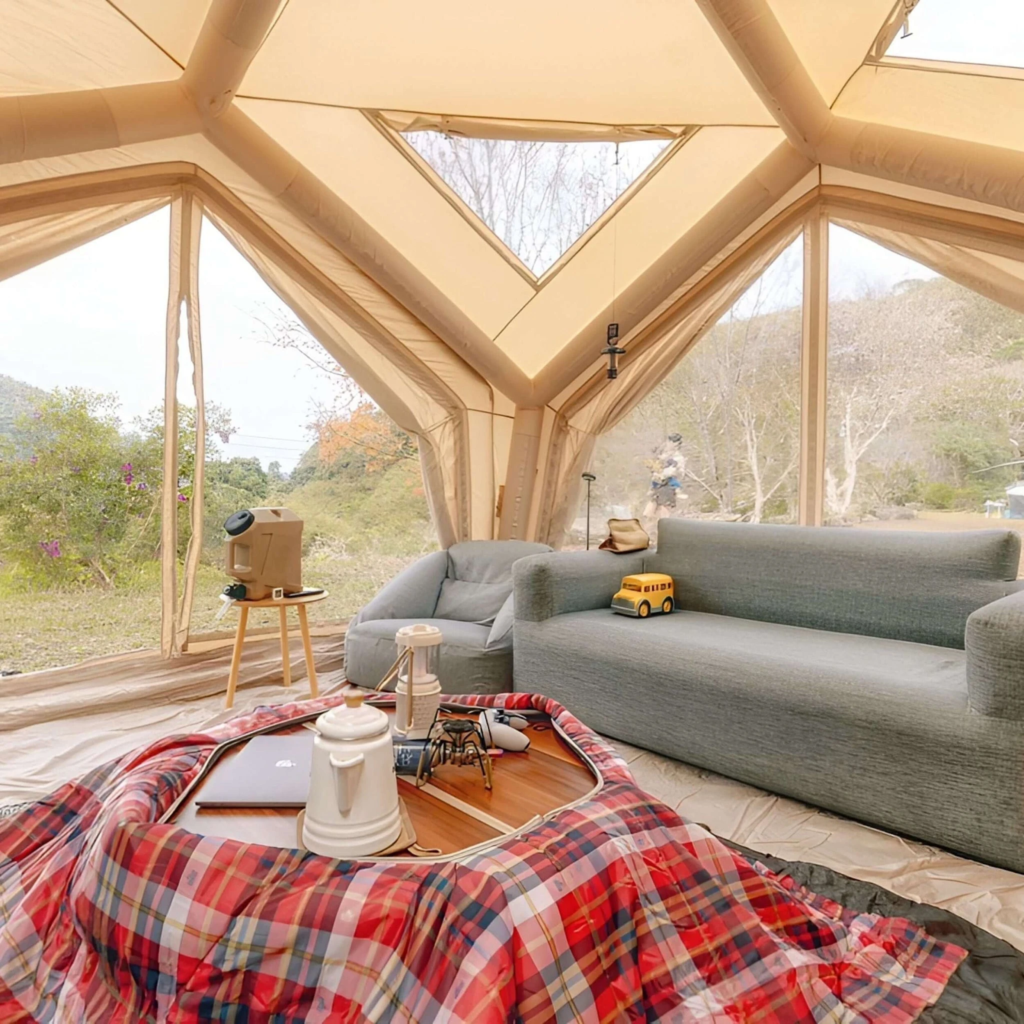
However, if your goal is a quick weekend escape without the three-hour assembly ritual, the blow up canvas tent technology has finally matured. These air-beam structures provide the same luxury and durability but can be fully deployed before your coffee gets cold.
The physics of comfort: why your tent is currently a sauna
Most people buy nylon tents because they are light and cheap. They forget that nylon is effectively a giant plastic bag. In a standard tent, your own breath creates a humid micro-climate that condenses on the ceiling and drips back down on you. It is a closed loop of damp misery.
Cotton canvas works differently. The fibers are naturally breathable, allowing moisture to escape while maintaining an interior temperature that is roughly 10-15 degrees different from the outside world. In the heat of July, it stays cool; in the frost of October, it holds heat. The fabric itself is also much quieter. If you have ever tried to sleep in a nylon tent during a windstorm, you know the sound of a thousand crinkling grocery bags. Canvas just sits there, absorbing the sound and the wind.
Floor space vs living space: the vertical rule
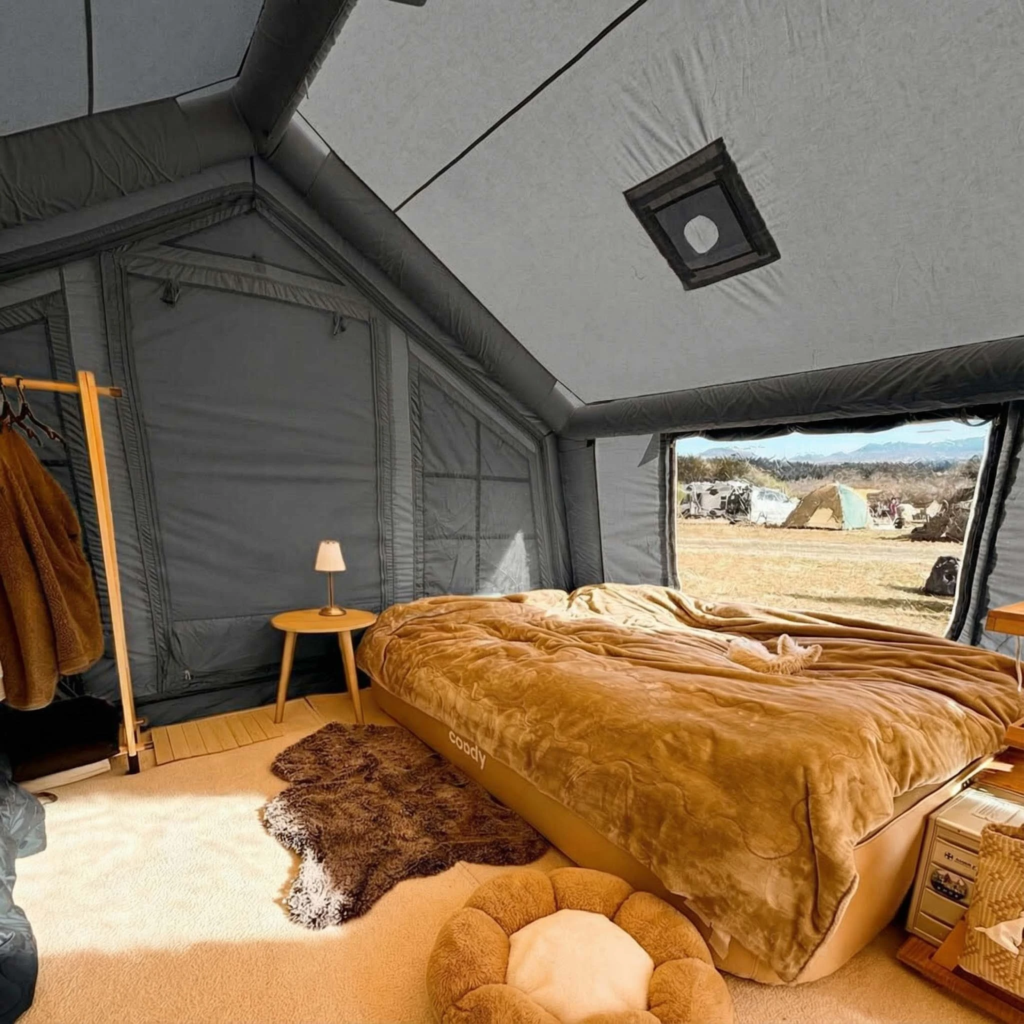
One of the biggest mistakes people make is looking only at the square footage of a tent. A 100-square-foot dome tent is not the same as a 100-square-foot wall tent. Because the walls of a dome slope inward, you can only stand up in the very center. The rest of the space is only good for storing bags or making you feel claustrophobic.
Glamping structures use vertical or near-vertical walls. This creates “usable volume.” It means you can place a cot against the wall, set up a small table, or walk around without hunching over like a gargoyle. For instance, the Coody 13.6 or the RBM Panda models provide enough head height that you can actually change your clothes without performing an accidental floor routine.
| Feature | Inflatable Canvas (Air-Beam) | Traditional Wall Tent (Steel Frame) |
| Setup Time | 7-15 minutes | 45-90 minutes |
| Wind Resistance | High (Flexes with gusts) | Very High (Rigid structure) |
| Portability | Single heavy bag | Multiple bags (Poles + Fabric) |
| Best Use | Weekend trips, road tours | Seasonal basecamps, hunting camps |
| Longevity | 10-15 years | 20+ years |
The “hot tent” factor: winter is no longer the off-season
The most significant shift in 2026 is the democratization of winter camping. You no longer need to be an elite mountaineer to enjoy the woods in January. A real canvas tent comes equipped with a stove jack – a heat-resistant port for a wood stove pipe.
This changes the entire math of the outdoors. Instead of huddling in a sleeping bag at 6:00 PM because the sun went down and the temperature dropped to freezing, you can sit in your tent in a t-shirt, stoking a fire and watching the snow through the windows. Models like the Bestona or the Coody Air Series are designed specifically to handle these thermal loads, making them true four-season homes.
Logistics and the “buy once, cry once” philosophy
A professional-grade canvas tent is an investment, not a impulse buy. Yes, they are heavy. You are looking at weights between 70 and 160 pounds depending on the size. This is gear for people with trucks, SUVs, or permanent backyard spots.
But consider the lifespan. A $300 nylon tent will be UV-damaged and ripped within three seasons. A high-quality cotton canvas structure is something you will likely leave to your kids. When you calculate the cost per night over a decade of use, the canvas tent is actually the cheaper option. It is the difference between buying a fast-fashion t-shirt and a tailored wool coat.